Reliable BMS Slave Board PCBA: Key to the New Energy Era
The global electric vehicle industry is accelerating into its "second half," where battery management systems have become the decisive differentiator for automakers and their supply chains. At the heart of every distributed BMS architecture lies the slave board (cell monitoring unit) – a mission-critical PCBA responsible for high-voltage sampling, current sensing, and cell balancing. For PCBA manufacturers, mastering the production of automotive-grade BMS slave boards is not just an opportunity – it is a strategic necessity.
In this article, we examine the market outlook, technical challenges, and production barriers of BMS slave board PCBA, and explain how our factory’s advanced manufacturing capabilities deliver the reliability that the EV industry demands.
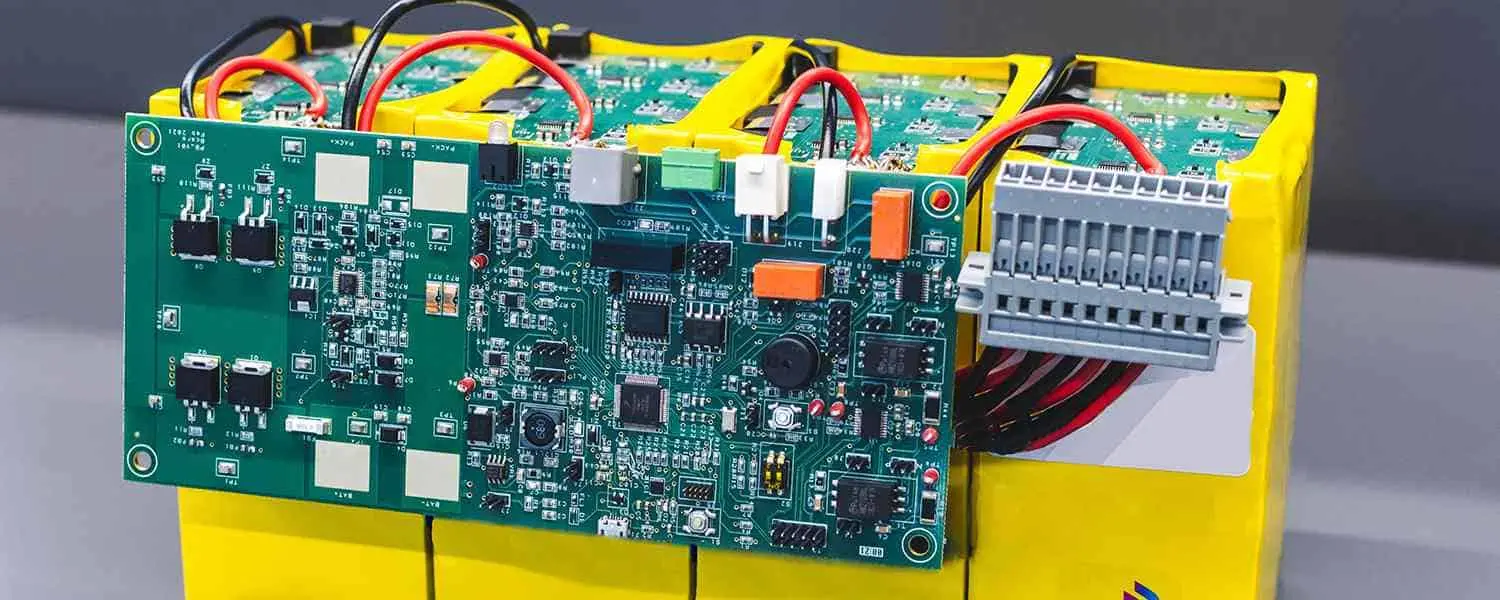 I. Soaring Market Demand for BMS Slave Boards
According to industry forecasts, the global lithium-ion BMS market will approach RMB 83.5 billion by 2032, with passenger-vehicle BMS alone reaching nearly RMB 88 billion. Within this segment, the distributed BMS architecture – our factory's core focus – is projected to grow from RMB 6.56 billion in 2025 to about RMB 9.48 billion by 2032.
Why distributed BMS? It offers superior scalability, reduced wiring harness weight, better noise immunity, and modular maintenance. As 800V high-voltage platforms become mainstream and automakers adopt platform-based strategies, demand for slave boards is shifting from an option to a standard requirement. At the same time, the global EV fleet has surpassed 100 million vehicles, unleashing a booming aftermarket for BMS PCBA – up 120% year-on-year in the first half of 2025, with BMS control boards accounting for 45% of that growth.
II. Core Technologies Shaping Tomorrow's BMS
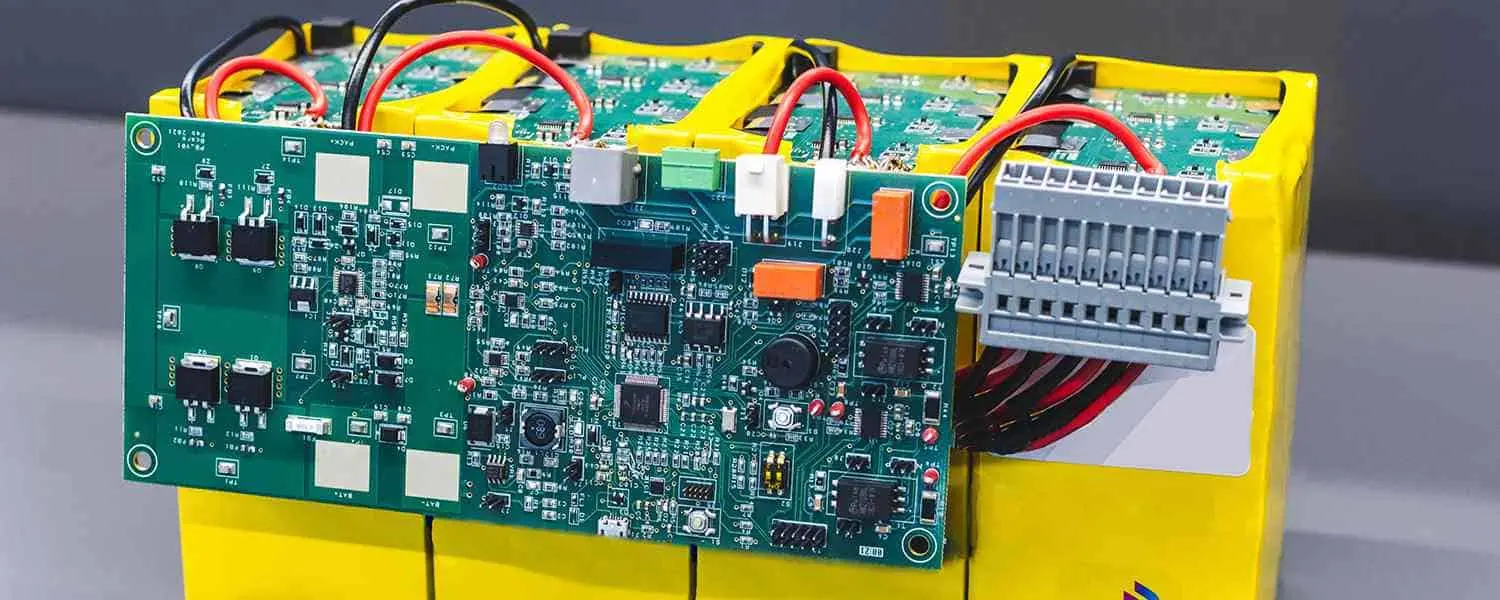
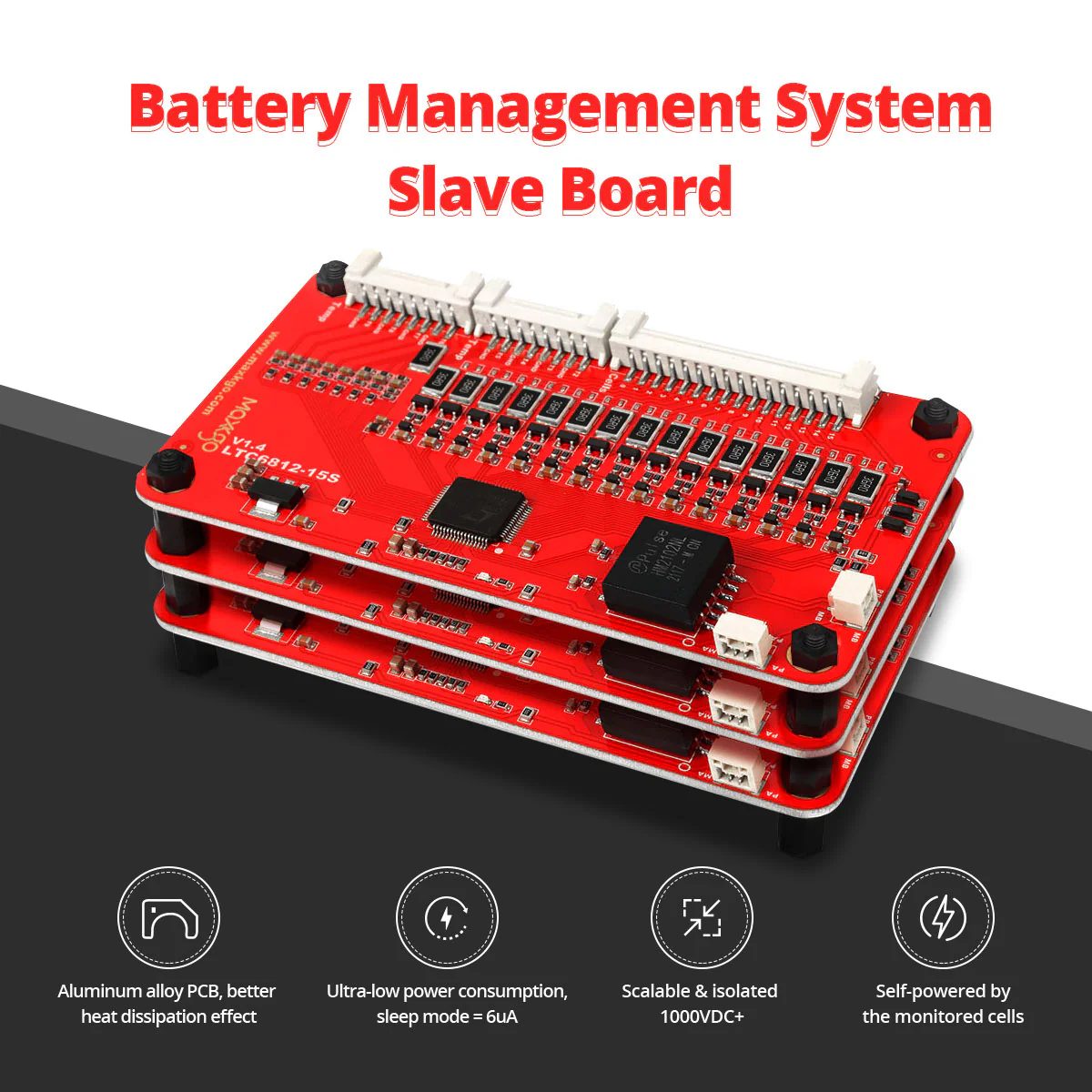
A modern BMS slave board integrates analog front-end (AFE) chips, a microcontroller (MCU), balancing resistors/switching arrays, NTC temperature sensors, and daisy-chain communication transceivers. The AFE, in particular, is the most value-intensive and technically demanding component, responsible for measuring per-cell voltage and temperature with "microscope-level" precision. Thanks to domestic advancements in China, suppliers like GigaDevice and Gevry now offer industrial-grade high-precision AFE chips, strengthening supply chain security.
Key technical trends include
High-accuracy sampling – voltage accuracy down to ±5 mV.
Wide temperature operation – from -40°C to 125°C.
Functional safety – moving toward ASIL D compliance.
Smart diagnostics – OTA updates and cloud-connected analytics.
Distributed BMS architectures are also evolving: modular node designs improve manufacturing consistency, while bidirectional daisy-chain loops enhance communication reliability.
III. Breaking Through Manufacturing Barriers
Despite its promise, high-volume production of BMS slave boards is notoriously difficult. Here are the top barriers – and how we overcome them.
Barrier 1: BGA Voiding Exceeds Automotive Limits
Conventional reflow soldering often yields voiding rates of 5-8% for BGA packages, but automotive standards demand <3%. Voids weaken solder joints and lead to micro-cracks under vibration.
Our solution: 10-zone nitrogen reflow ovens combined with vacuum reflow technology. Real-time temperature profiling and laser-cut stencils (±15 μm) paired with 3D SPI ensure solder paste thickness variation within ±10%. We consistently achieve BGA voiding below 1.8%.
Barrier 2: High-Voltage Isolation Complexity
EV battery packs range from 48V to 1500V DC. Safe creepage and clearance distances must meet IEC 62109/UL 1741. Even micron-level misalignment of isolation components can break down dielectric strength.
Our solution: Pre-review of safety spacings during PCB design, including slots/isolation barriers. Precision placement for digital isolators, followed by 100% dielectric withstand testing.
Barrier 3: High-Current Carrying and Thermal Management
Power paths carry tens to hundreds of amperes, demanding heavy copper PCBs (2-6 oz). Thick-copper reflow profiles differ significantly from standard boards, and large solder pads are prone to voids or short circuits.
Our solution: Tailored reflow profiles for heavy copper, stepped stencils, and X-ray inspection to keep power device voiding below 25%. Selective conformal coating leaves safe clearances around high-voltage areas.
Barrier 4: Automotive-Grade End-to-End Traceability
A single latent defect in a delivered BMS PCBA can trigger massive recall costs. Traceability must cover component lots, placement parameters, and test data for up to 15 years.
Our solution: Four-level quality control – incoming material validation, in-process SPI/AOI/X-Ray, 100% ICT/FCT, and a MES system that logs every parameter for complete life-cycle traceability.
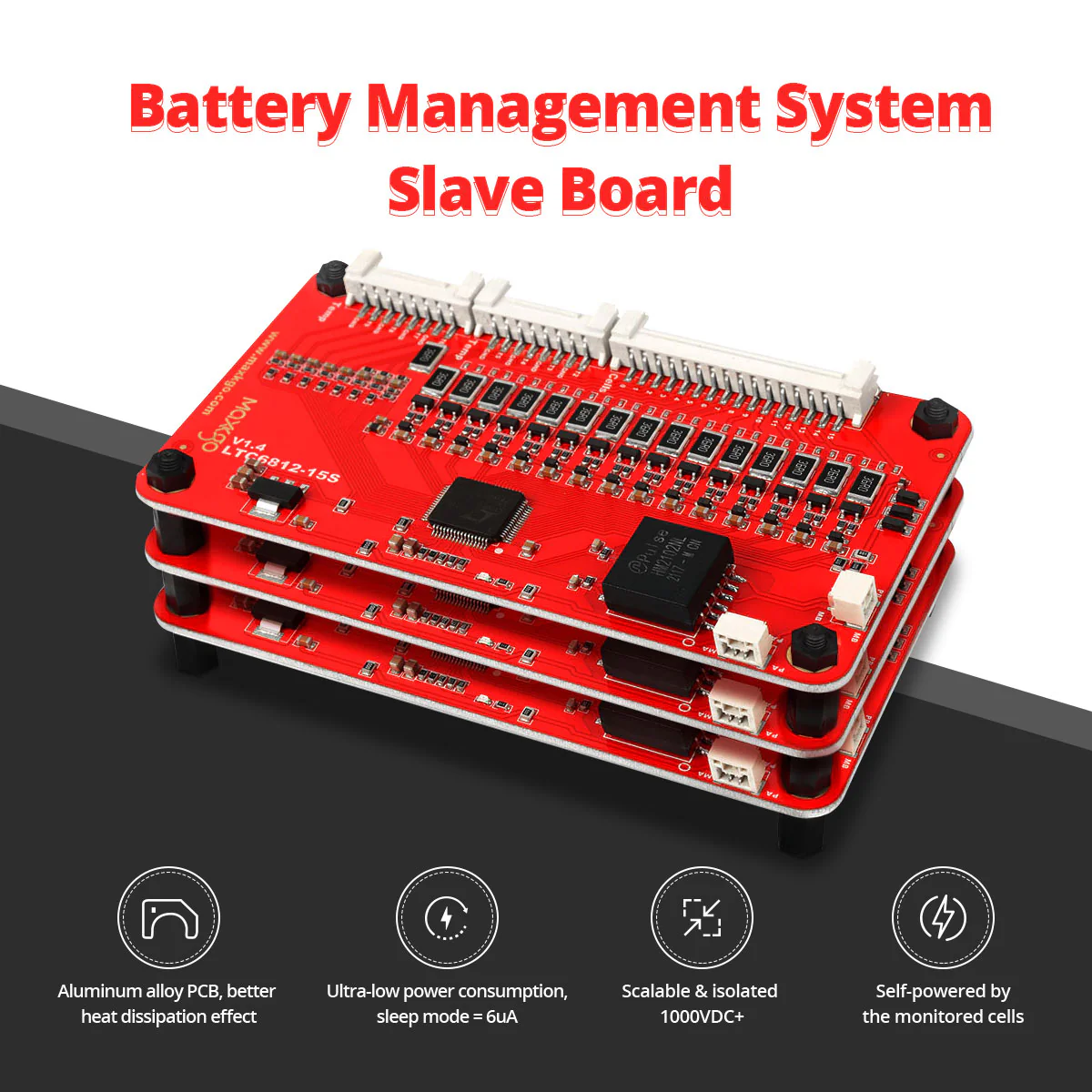 IV. Our Factory's Manufacturing Firepower
Our facility is built specifically for high-reliability automotive PCBA:
Scale & capacity: 30 high-speed SMT lines, 8 AI auto-insertion lines, 8 wave soldering lines, and 8 assembly lines. Total placement capacity exceeds 3 million chips per hour and nearly 2 billion points per month.
Precision placement: Supports 01005 components and 0.1 mm-pitch ICs with ±25 μm accuracy.
One-stop service: Component sourcing → SMT → DIP → post-solder testing → conformal coating → final assembly → OEM/ODM. One partner, complete delivery.
Automotive certifications: IATF 16949, ISO9001, ISO14001, ISO13485, ISO45001, IEQC, and ESD. All production lines connected to MES with closed-loop temperature, humidity, and ESD monitoring.
Flexible production: Digital scheduling enables 7-day delivery for 50-piece pilot runs, and modular design reduces customization overhead – improving small-batch margins by 20%.
Conclusion: Your Trusted Partner for BMS Slave Board PCBA
Manufacturing a BMS slave board is far more than assembling a circuit board. It demands mastery of precision analog sampling, functional safety, high-voltage isolation, heavy-copper soldering, and automotive quality systems. By embedding design for manufacturing (DFM) and signal integrity simulation upfront, leveraging precision assembly and vacuum reflow, and enforcing full MES traceability, we turn these challenges into repeatable, scalable advantages.
Choosing us means choosing a partner who understands the unique pain points of EV battery electronics – from early prototype to mass production. As the EV industry races toward higher voltages, safer batteries, and smarter BMS, let’s build the future together, one reliable slave board at a time.
Contact us to discuss your BMS slave board requirements or to schedule a factory audit.
Shenzhen Kingsheng Technology Co., Ltd. has rich experience and a professional technical team in PCBA.
Contact KingshengPCBA today to request a quote or discuss your PCBA project.
 +86 13828766801
 kspcba@c-alley.com
 https://www.kingshengpcba.com/
 2/F, Building 6, Tangtou 3rd Industrial Zone, Tangtou Community, Shiyan Town, Baoan District, Shenzhen, China, 518108