Technical Analysis of PCBA for Retail Self-Checkout Systems: From Component Selection to Mass Production
In recent years, the retail industry has accelerated its digital transformation, with self-checkout systems seeing continuously increasing penetration in supermarkets, convenience stores, and food service outlets. A complete self-checkout terminal integrates scanning modules, payment modules, printing modules, displays, weight sensors, and a main control unit—all of which rely on highly reliable
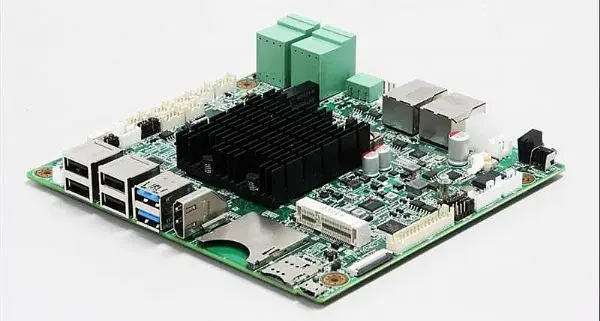
PCBAs for signal processing and command control. As a PCBA manufacturing facility, we have undertaken over 20 self-checkout system projects in the past three years and have observed common design issues among customers, including excessive interface redundancy, disorganized power supply partitioning, and inadequate ESD protection. This article breaks down the key design considerations and production precautions for retail self-checkout system PCBAs from a manufacturing perspective.
 I. Hardware Selection: Three Core Requirements for Retail Environments
1. Balanced Processor and Memory Design
Self-checkout systems must simultaneously run POS software, drive scanners, and process payment transactions. An ARM Cortex-A series processor (e.g., Rockchip RK3568) with 2GB RAM + 16GB eMMC is recommended. Avoid low-end microcontrollers that cause interface lag, and refrain from unnecessarily opting for industrial-grade Core processors, which increase the complexity of thermal design and power management.
2. Practical Principles for Interface Configuration
- USB ports: Reserve 2 USB 2.0 Host ports for barcode scanners and receipt printers, and 1 USB OTG port for firmware updates.
- Serial ports: Use an RS232 serial port for weight sensor communication; reserve 1 TTL serial port for a 4G module (required for standalone network connectivity in some stores).
- GPIO: At least 6 input/output ports to control the cash box solenoid, buzzer, and status indicators.
- Ethernet:: A Gigabit PHY chip is mandatory; 100 Mbps ports experience packet loss during peak data transfer of large images.
3. Partitioned Power Supply Architecture
The power supply design of the self-checkout system PCBA requires zoned power supply according to load characteristics. The 12V power rail is mainly used to drive the touchscreen backlight and printer motor. These loads experience significant current fluctuations during startup, and the ripple must be controlled within 100mV. The 5V power rail provides power to the main control chip, memory chips, and USB peripherals. The ripple requirement is even stricter, needing to be below 50mV. It is recommended to use a synchronous buck converter (such as MP2482) to achieve 12V to 5V conversion. The 3.3V power rail supplies various sensors and GPIO levels, with a ripple requirement not exceeding 30mV. Using an LDO solution when converting from 5V to 3.3V can achieve lower noise output. The 1.8V power rail is dedicated to the VTT termination resistor network for DDR memory. It has the highest requirements for power purity, and the ripple must be controlled below 20mV. During PCB layout, the ground planes of different power areas should be single-point grounded to avoid interference from the large current return path during printer motor startup with the CPU and memory reference ground potential.
During PCB layout, the ground planes of different power regions should be single-point grounded to prevent high-current return paths from printer motor startup from interfering with the reference ground potential of the CPU and memory.
II. PCB Design: Layout Standards to Reduce Field Failures
1. Signal Isolation for Scanner and Weight Sensor
The differential signal traces output by the barcode scanner must be of equal length and grounded; clock lines or power transition lines are prohibited within 2mm of the traces. The millivolt-level analog signals of the weight-sensing scale must be routed on a separate inner layer, with an outer layer covered by a shielded copper ground plane. A 0-ohm resistor and a ferrite bead are connected in series at the interface for both signals to facilitate noise suppression during later debugging.
2. Critical ESD Protection Locations
TVS tubes for all external interfaces (USB, serial port, Ethernet, GPIO terminals) should be placed as close as possible to the interface connector, with traces routed through the TVS before reaching the chip.
Add BAV99 dual-diode clamping to the touchscreen I2C control lines.
Reserve 4 M3 screw holes at the PCB corners to connect the chassis ground via metal standoffs. The chassis ground and signal ground should be single-point connected at the power entry point using a 1 nF capacitor in parallel with a 1M resistor.
3. Thermal Design Considerations
Arrange a via array under the main control chip, connecting to inner-layer copper and the back-side thermal pad. No electrolytic capacitors should be placed within 3 mm of the printer driver chip (e.g., DRV8825); this area should be solder mask–defined and left uncoated, with thermal grease applied during mass production to contact the aluminum base plate.
 III. Manufacturing and Testing: Three Nodes to Reduce Rework Rates
1. Special Controls for SMT Process
III. Manufacturing and Testing: Three Nodes to Reduce Rework Rates
1. Special Controls for SMT Process
Self-checkout PCBAs often contain multiple high-density connectors (e.g., 0.5 mm pitch FPC connectors). The stencil aperture should be reduced by a 1:0.8 ratio with chamfered edges to prevent solder bridging. Before placing connectors, use an ion fan to perform 30 seconds of static elimination on the PCB to prevent ESD damage to CMOS chips.
2. In-Circuit Testing Coverage for Critical Signals
- Power supply test: Power-on sequencing for 12V/5V/3.3V/1.8V; overshoot for each voltage rail should not exceed 10% of the rated value.
- Interface test: Insert a standard scanner and simulate 1,000 triggers; the bit error rate must be below 0.1%.
- Analog test: Input a 0–100 mV DC voltage to the weight sensor port; the deviation between ADC sampling value and theoretical value should not exceed ±0.5%.
3. Aging and Conformal Coating
After full assembly, the system must undergo 4 hours of high-temperature aging (50°C environment, running a continuous scan simulation program). For checkout terminals used in fresh food areas, the PCBA must be sprayed with conformal coating (acrylic or polyurethane type) to a thickness of 30–50 μm, with connectors and test points masked with tape
IV. Quality Closure During Mass Production
Randomly sample 3% of PCBAs from each shipment for vibration testing: frequency 10–55 Hz, amplitude 0.35 mm, 30 minutes in each of the X, Y, and Z directions. After testing, recalibrate the weight sensing channel; zero drift voltage must be less than 0.1 mV. Establish a material lot traceability system that links each PCBA's unique serial number to the placement machine, reflow profile, and tester. When a field failure is reported, the specific production batch can be identified within 4 hours.
Shenzhen Kingsheng Technology Co., Ltd. has rich experience and a professional technical team in PCBA.
Contact KingshengPCBA today to request a quote or discuss your PCBA project.
 +86 13828766801
 kspcba@c-alley.com
 https://www.kingshengpcba.com/
 2/F, Building 6, Tangtou 3rd Industrial Zone, Tangtou Community, Shiyan Town, Baoan District, Shenzhen, China, 518108