Automotive Infotainment System PCBA Manufacturing Case Study
Project Background and Manufacturing Challenges
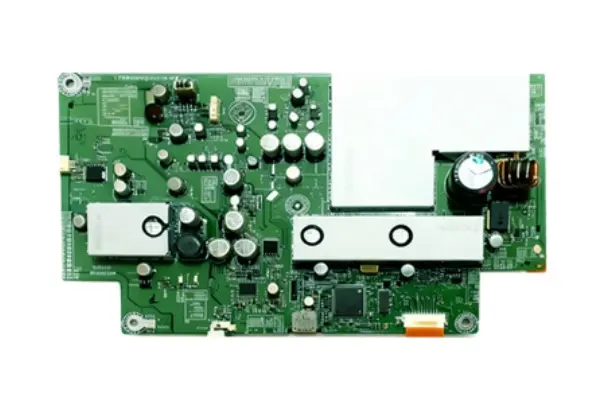
With the rapid development of intelligent and connected vehicles, in-vehicle infotainment (IVI) systems have evolved from traditional radios and navigation devices into the core hub of smart cockpits, integrating high-definition large-screen displays, intelligent voice interaction, and connected vehicle communication. As the "brain" of the vehicle, the infotainment system PCBA (Printed Circuit Board Assembly) not only undertakes complex signal processing tasks but is also directly related to driving safety and user experience.

Compared to consumer electronics, automotive electronics have extremely stringent PCBA manufacturing requirements. The product must operate stably for long periods under extreme temperatures ranging from -40°C to 125°C, while also possessing strong anti-electromagnetic interference capabilities and a zero-defect quality standard. This case study aims to demonstrate how, through automotive-grade manufacturing processes, full-process digital traceability, and rigorous reliability testing, we deliver high-reliability infotainment system PCBA assemblies to our customers.
Automotive-Grade Processes and Core Manufacturing Capabilities
To meet the high-density and high-reliability demands of automotive electronics, we have implemented several targeted processes in manufacturing:
1. High-Density Interconnection and Precision Placement
Automotive infotainment systems typically use multi-layer HDI (High-Density Interconnector) boards to accommodate main control chips, memory modules, and various communication interfaces. We utilize high-precision, fully automatic placement machines that support precise mounting of micro components such as 01005 and 0.4mm-pitch BGA (Ball Grid Array) chips, with placement accuracy controlled within ±0.01mm. This ensures complex circuit functions are realized on a very compact board surface.
2.Strict Solder Joint Quality Control
Addressing the extremely high requirements for solder joint reliability in automotive electronics, we have introduced a ten-zone nitrogen reflow soldering process. This effectively reduces oxidation during soldering, improving solder joint fullness and electrical connection stability. Concurrently, 3D SPI (Solder Paste Inspection) and 3D AOI (Automated Optical Inspection) equipment are used to perform 100% inspection of solder joints after printing and placement, controlling the solder joint defect rate to within 10 parts per million (10 ppm). For hidden solder joints like BGAs, X-ray inspection technology is used to detect internal voiding and solder bridging.
3.Environmental Tolerance and Anti-Interference Design
To adapt to engine compartments or complex electromagnetic environments, PCBA manufacturing utilizes high-Tg (glass transition temperature ≥170°C) substrate materials and applies conformal coating (moisture-proof, salt-spray-proof, and mold-proof), ensuring performance does not degrade in humid, hot, or vibrating conditions. Additionally, by optimizing routing during Layout design and using electromagnetic shielding coatings in manufacturing, we successfully pass automotive-grade EMC (Electromagnetic Compatibility) testing.
 Digital Traceability and Full-Process Quality Control
The automotive supply chain emphasizes product consistency and traceability. We strictly adhere to the IATF 16949 automotive quality management system and have introduced MES (Manufacturing Execution System) and WMS (Warehouse Management System) to achieve comprehensive digitalization of production operations:
Material Error-Proofing and Traceability: All electronic raw materials are assigned a unique barcode upon warehousing and managed through an intelligent storage system. During production setup, the system automatically verifies the material code and placement station, eliminating the risk of incorrect material usage.
Full-Process Data Recording: Key process parameters for every production step—from solder paste printing and component placement to reflow soldering temperature profiles—are captured in real-time and linked to the product barcode. In the event of an anomaly, rapid traceability to specific material batches, production equipment, and operators is possible.
Comprehensive Functional Testing: Assembled PCBAs undergo both ICT (In-Circuit Test) and FCT (Functional Testing). For infotainment systems, we have customized automated test equipment to comprehensively check dozens of functions, including reverse camera input, Wi-Fi/Bluetooth signal strength, touch response, and audio output, ensuring 100% conformity of shipped products.
Conclusion
Through precision HDI manufacturing processes, stringent automotive-grade testing standards, and a comprehensive digital traceability system, we have successfully solved the reliability challenges of automotive infotainment system PCBAs under complex operating conditions. We are committed to providing global automakers and Tier 1 suppliers with one-stop PCBA manufacturing services—from design optimization and sample prototyping to mass production—supporting the safe and efficient development of the intelligent vehicle industry.
Shenzhen Kingsheng Technology Co., Ltd. has rich experience and a professional technical team in PCBA.
Contact KingshengPCBA today to request a quote or discuss your PCBA project.
 +86 13828766801
 kspcba@c-alley.com
 https://www.kingshengpcba.com/
 2/F, Building 6, Tangtou 3rd Industrial Zone, Tangtou Community, Shiyan Town, Baoan District, Shenzhen, China, 518108