Medical Sensor Interface PCBA: Analysis of Manufacturing Challenges
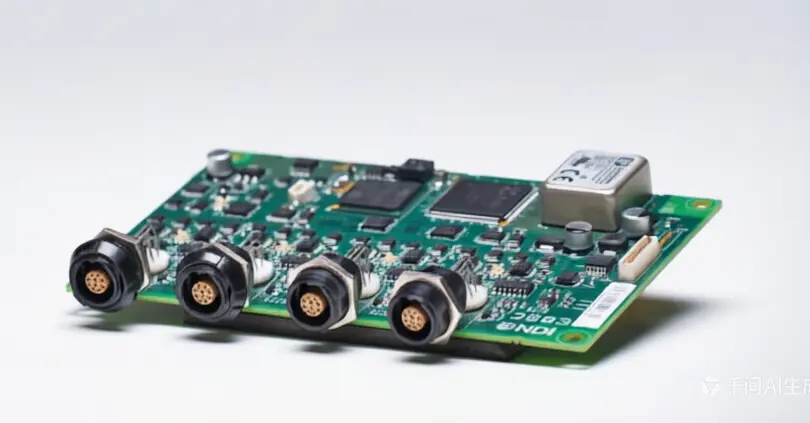
In medical electronic devices, the sensor interface PCBA undertakes the core functions of signal acquisition, conversion, and transmission. Such products have extremely high requirements for precision, stability, and reliability. Any minor defect can lead to equipment misjudgment, or even endanger patient safety. This article takes a medical sensor interface PCBA as an example to analyze the core difficulties and solutions in its manufacturing process.
 I. High-Precision Soldering and Assembly Requirements
Medical sensor interface PCBAs usually integrate various precision components, such as miniature connectors, high-precision resistors and capacitors, and dedicated sensor chips. These components are tiny in size, with pin pitches that can be less than 0.3mm, posing extremely high requirements for the soldering process.
1. Soldering Process Difficulties
- Micro-pitch Soldering: Requires the use of high-precision reflow soldering ovens, and the temperature curve must be precisely controlled to avoid cold solder joints and solder bridging.
- Odd-form Component Handling: Some sensor interfaces require the installation of specially shaped connectors, necessitating custom fixtures to ensure precise positioning.
- Manual Soldering Supplement: For areas that cannot be machine-soldered, experienced technicians must complete the process manually, assisted by magnifying glasses or microscopes.
II. Signal Integrity and Electromagnetic Compatibility Design
Medical sensor interfaces need to process weak signals, imposing extremely high demands on signal integrity. Meanwhile, medical equipment must pass strict electromagnetic compatibility tests, which presents challenges for PCB layout and routing.
1. Signal Integrity Control
- Impedance Matching: High-speed signal lines require strict impedance control to prevent signal reflection.
- Routing Optimization: Analog signals and digital signals are routed in separate zones to reduce crosstalk.
- Ground Plane Design: A multi-layer board design is adopted to ensure a complete ground plane and reduce noise.
2. Electromagnetic Compatibility Measures
- Shielding Design: Add shielding cans to key areas to suppress electromagnetic radiation.
- Filter Circuits: Add filtering components at the power input and signal lines to filter out high-frequency interference.
- Grounding Strategy: Use single-point grounding or multi-point grounding, selecting the optimal solution based on frequency characteristics.
III. Strict Quality Control and Reliability Testing
Medical products need to pass multiple international certifications, such as ISO13485 and IEC60601, which impose extremely strict requirements on quality control during the manufacturing process.
1. Incoming Material Inspection
- Component Screening: All components must be accompanied by original factory certificates, and key devices must undergo aging tests.
- PCB Board Inspection: Use AOI (Automated Optical Inspection) to check for circuit defects and ensure layer-to-layer alignment accuracy.
2. Production Process Control
- First Article Confirmation: Before mass production of each batch, a first article must be produced and confirmed by the customer before full-scale production can proceed.
- In-process Patrol Inspection: Set up quality control points at key processes to monitor soldering quality in real-time.
3. Finished Product Testing
- Functional Testing: Simulate the actual usage environment to verify signal acquisition accuracy.
- Environmental Testing: Conduct high and low temperature, humidity, and vibration tests to ensure product stability.
- Safety Compliance Testing: Pass withstand voltage, insulation resistance, and other tests to meet medical equipment safety standards.
The manufacturing difficulties of medical sensor interface PCBAs are mainly concentrated in three aspects: high-precision soldering, signal integrity control, and strict quality control. Solving these difficulties requires advanced equipment, professional processes, and extensive experience. As a PCBA processing factory, continuous investment in R&D and optimization of processes is necessary to meet the increasingly stringent requirements of medical devices.
Shenzhen Kingsheng Technology Co., Ltd. has rich experience and a professional technical team in PCBA.
Contact KingshengPCBA today to request a quote or discuss your PCBA project.
 +86 13828766801
 kspcba@c-alley.com
 https://www.kingshengpcba.com/
 2/F, Building 6, Tangtou 3rd Industrial Zone, Tangtou Community, Shiyan Town, Baoan District, Shenzhen, China, 518108