Three Core Challenges and Solutions in Underwater ROV Hardware Design
Introduction: More Than Just "Waterproofing"
With the advancement of the "Maritime Power" strategy and the intensifying global competition for deep-sea resources, underwater robots (ROVs/AUVs) have moved from military black technology to the civilian market. As a PCBA manufacturer, we know that the R&D threshold for underwater robots is extremely high. At depths of 300 meters or more, even the slightest flaw in a PCB can lead to complete failure of the entire system.
From the perspective of
PCBA manufacturing and hardware design, this article breaks down the three major challenges in underwater robot design.
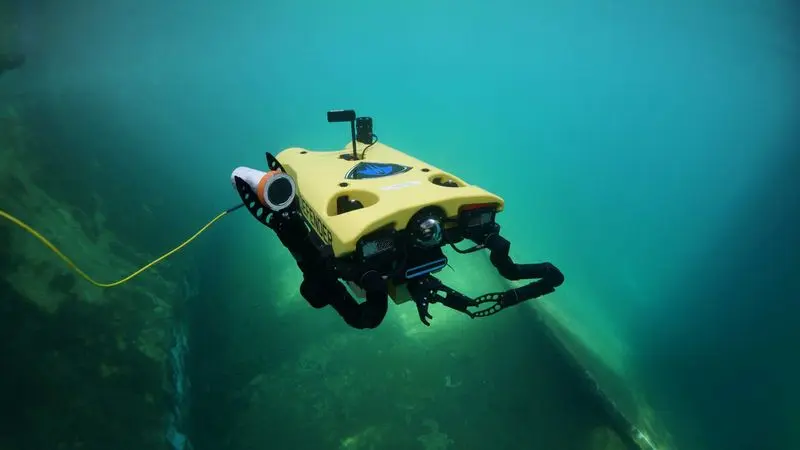 1. Power and Heart: High-Voltage Insulation in the Power Chain
What is the biggest pain point for underwater robots? Power transmission. To solve the voltage drop problem over long cables, most industrial-grade ROVs use high-voltage DC power (e.g., 300V–400V DC), which completely breaks through the "safety zone" of traditional 48V low-voltage designs.
When designing power boards, two conflicting goals arise: balancing
high voltage and
efficiency. To achieve over 2kW of thrust within a limited sealed compartment, MOSFETs rated for over 1000V must be used. These devices generate significant electromagnetic interference and voltage spikes during switching.
From a PCBA perspective, the key points are:
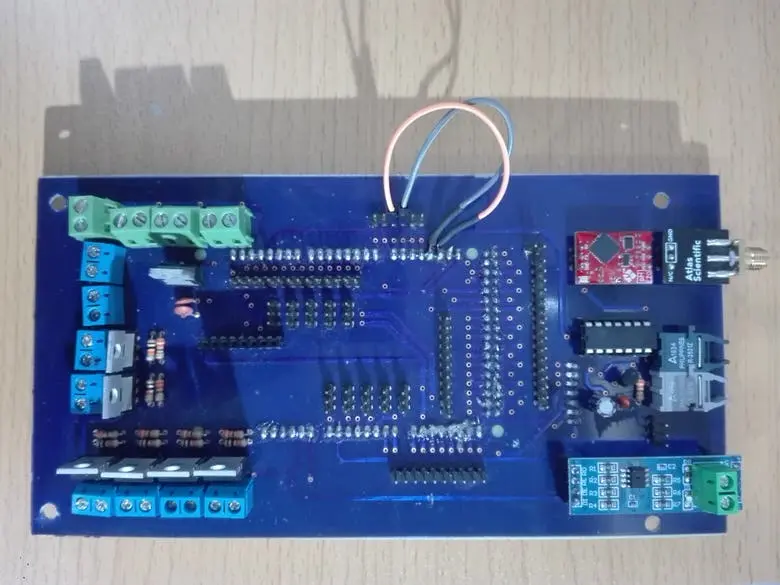
Isolation Design: To prevent the high-voltage side from breaking down the logic control side, PCB layout must ensure proper creepage distances. Fiber-optic communication has become standard, but even without fiber optics, the isolation voltage rating of driver chips must meet derating requirements (actual stress below 50% of rated value).
Thermal Management Architecture: The sealed compartment is either vacuum-filled or filled with high-pressure insulating oil, so air convection cooling is ineffective. Therefore, PCBA manufacturing must adopt
aluminum-core PCBs or
heavy copper + thermal via array processes to directly conduct heat from power transistors to the metal housing, utilizing seawater for cooling. Don’t underestimate this: industry test data shows that optimized thermal management can increase equipment endurance by over 30%.
2. Deep-Sea Survival: Pressure Tolerance and Potting Technology
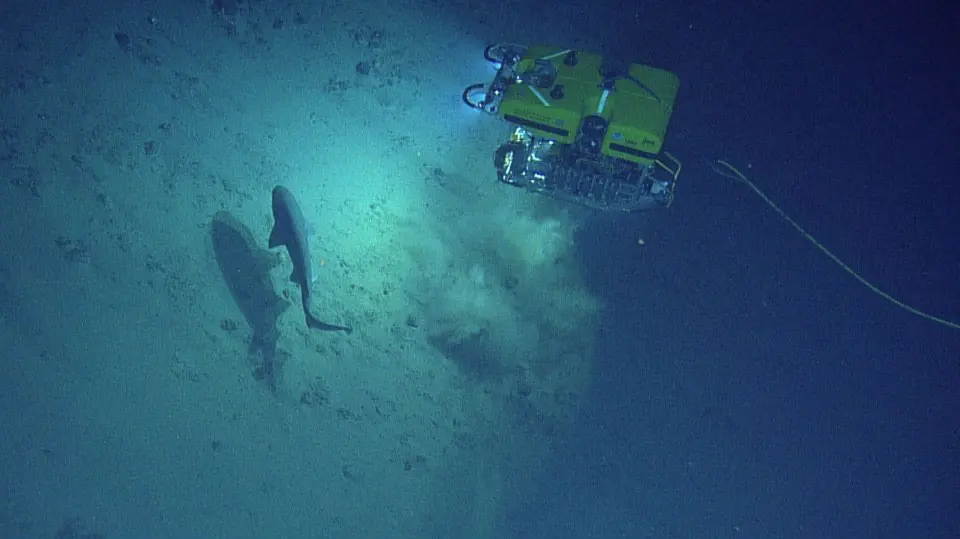
Traditional thinking holds that electronics must be placed inside thick metal housings to withstand pressure. However, modern advanced designs are shifting toward pressure-tolerant technology. For deep-sea equipment operating below 6,000 meters,
pressure-resistant housings are extremely costly.
Recent industry research shows that by using flexible polymer encapsulation (soft-molding), the arrangement of electronic components directly affects shear stress under high pressure. Studies have found that optimizing the geometric layout of components on a PCB—referred to as "geometric coherence index optimization"—can reduce shear stress under high-pressure conditions by up to 45.5%.
This places stringent demands on PCBA manufacturing:
Zero-Defect Soldering: Under deep-sea high pressure, any tiny cold solder joint will crack due to physical deformation. High-reliability 3D X-ray inspection must be used to ensure the integrity of solder joints (e.g., BGAs) under pressure changes.
Potting Process: To eliminate air gaps, the entire board typically undergoes vacuum potting with epoxy resin or silicone rubber. This requires extremely high PCB cleanliness. Any residual flux can create bubbles in the potting compound, leading to electrical failure under high pressure.
3. Sensory System: Signal Integrity (SI) Challenges
Underwater robots need to transmit high-definition video and sonar data in real time. Video signals (e.g., MIPI/LVDS/GMSL) are easily degraded when passing through bulkhead connectors.
During manufacturing,
impedance control is critical. We must ensure:
Strict Layer Stackup: For camera modules and sonar processing boards, precise control of 100Ω differential impedance (±5% or better) is required. Otherwise, signal transmission distance will be significantly reduced.
Connector Selection and Soldering: Underwater bulkhead connectors are often high-density, fine-pitch connectors. As a PCBA factory, custom soldering fixtures must be used to prevent signal crosstalk caused by poor soldering—especially critical when operating in turbid waters.
 Conclusion
As a PCBA manufacturer, we provide not just circuit boards, but complete hardware solutions validated through harsh environments. With the rise of the marine economy, factories capable of high-end, high-reliability PCBA manufacturing will become an indispensable link in the underwater technology industry chain.
Shenzhen Kingsheng Technology Co., Ltd. has rich experience and a professional technical team in PCBA.
Contact KingshengPCBA today to request a quote or discuss your PCBA project.
 +86 13828766801
 kspcba@c-alley.com
 https://www.kingshengpcba.com/
 2/F, Building 6, Tangtou 3rd Industrial Zone, Tangtou Community, Shiyan Town, Baoan District, Shenzhen, China, 518108