Industrial IoT Gateway PCB: Many Smart Factory Projects Fail Because This Board Is Treated Too Lightly
A lot of equipment manufacturers are now adding IoT functions to their machines.
They want:
- remote status monitoring,
- cloud data upload,
- mobile app alarm push,
- maintenance reminders,
- production traceability.
On paper, it sounds simple:
just add one gateway board between the machine and the server.
But in actual projects, this “extra board” often becomes the most troublesome part of the entire system.
Why?
Because the
Industrial IoT gateway PCB is doing much more than simple communication forwarding.
It is sitting in the middle of several unstable worlds at the same time:
- old machine protocols,
- noisy industrial control cabinets,
- unstable field power,
- cloud platform communication,
- long-hour unattended operation.
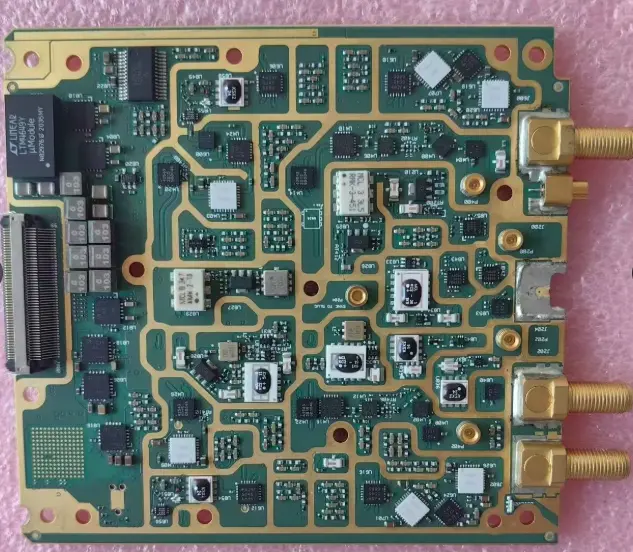
If this board is not built properly, customers start seeing the kind of problems that are extremely annoying:
- machine data disappears randomly,
- cloud platform shows offline,
- alarms arrive late,
- remote commands fail,
- firmware hangs after weeks of running.
And once the machine loses “smart monitoring” reliability, the whole IoT upgrade starts looking useless.
That is why this board deserves much more engineering attention than many OEMs initially expect.
This Is Not Just a Communication Converter Board
Some buyers assume an IoT gateway PCB is basically:
RS485 in, Ethernet/WiFi out.
Actually, a stable industrial gateway board usually has to handle all of these together:
- collecting data from PLC or sensors,
- converting multiple industrial protocols,
- buffering and processing communication packets,
- maintaining cloud connection,
- storing temporary data during network drop,
- handling remote firmware updates,
- surviving continuous online operation.
That means the board is not passive.
It is continuously translating, checking, storing, reconnecting, and protecting data traffic.
This creates a very different reliability requirement compared with ordinary communication interface boards.
If one RS485 module fails, maybe one device disconnects.
If one IoT gateway PCB fails:
the customer loses visibility of the entire machine.
For many smart factory projects, that is unacceptable.
Where Most Industrial IoT Gateway Boards Start Going Wrong
This category has a common issue:
samples often look fine.
Field deployment is where problems begin.
Because during office demo testing, the board usually runs:
- in clean power conditions,
- with short communication cables,
- under stable WiFi/LAN,
- for only a few hours.
Real factory environments are very different.
Protocol Layer Looks Compatible, But Field Devices Behave Differently
Many machines still use:
- Modbus RTU,
- CAN bus,
- custom UART,
- legacy PLC polling.
On paper, protocol conversion is possible.
But once multiple devices start polling at different intervals, packet congestion and timeout handling become critical.
A poorly optimized gateway board starts showing:
- delayed data upload,
- missing registers,
- duplicate packet parsing,
- false offline detection.
Customers often think this is software platform trouble.
Very often, it starts from gateway board communication processing limits.
Long-Term Online Stability Is Harder Than Most People Think
An industrial gateway is expected to stay online 24/7.
Not for one day.
For months.
That means:
- memory leakage,
- MCU deadlock,
- communication stack overflow,
- watchdog failure,
- power ripple sensitivity
all become real-world issues.
This is why some boards work perfectly in the lab but start freezing randomly after two or three weeks in customer factories.
And those are the hardest complaints to solve remotely.
Antenna and Wireless Section Are Frequently Underestimated
If the board uses:
signal design becomes another headache.
Inside a metal control cabinet, surrounded by motor cables and switching power supplies, wireless performance drops much faster than in normal consumer devices.
Without proper RF layout, shielding consideration, and antenna matching, users start seeing:
- unstable upload intervals,
- weak signal alarms,
- frequent reconnection.
Again, customers only see "smart system not stable".
They do not care which section failed.
Dirty Power Is a Silent Killer
Many IoT gateway boards are connected inside old industrial cabinets where 24V power is far from clean.
When relays, inverters, and motors switch, voltage fluctuation hits the board constantly.
Without:
- strong DC filtering,
- surge suppression,
- brownout handling,
- isolated communication sections,
the board may reboot silently or lose packets.
This creates the most frustrating kind of bug:
everything looks normal, but data is unreliable.
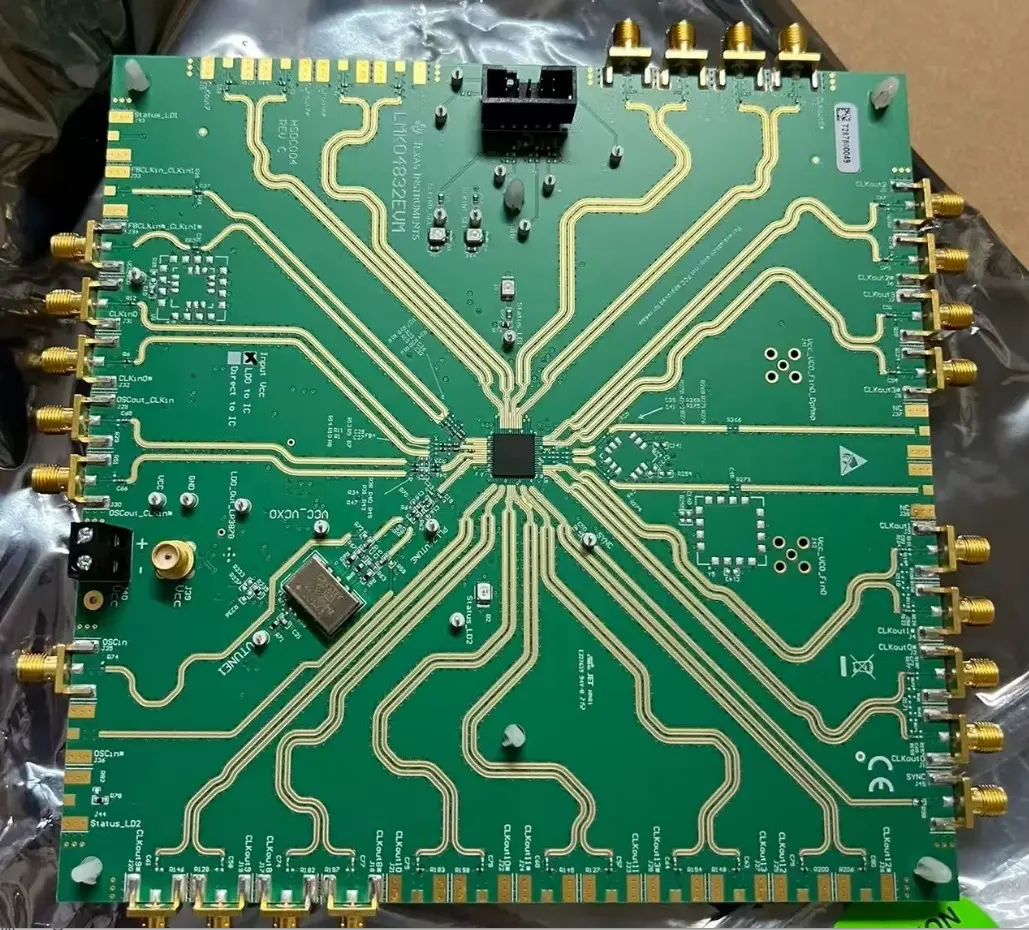 What OEM Buyers Should Actually Focus On When Sourcing an Industrial IoT Gateway PCB
A lot of buyers compare only:
- CPU spec,
- memory size,
- communication ports.
Those matter, but they are not enough.
The real question should be:
can this board stay connected and keep data trustworthy after months in an industrial cabinet?
A reliable Industrial IoT gateway PCB should have:
Multi-Protocol Communication Stability
RS485, Ethernet, CAN, UART, wireless — all coordinated smoothly.
Local Data Buffer Protection
No immediate data loss during temporary cloud/network interruption.
Strong Watchdog Recovery Logic
Automatic self-restart when communication stack hangs.
Industrial Power Protection
Stable under noisy 24V environments.
RF/Wired Communication Anti-Interference Design
Especially for mixed cabinet installations.
Firmware Upgrade Safety
Remote update cannot easily brick the board.
Long-Hour Aging Verification
This is critical but often skipped by low-cost suppliers.
Why Many IoT Retrofit Projects End Up Replacing the Gateway Supplier
This happens a lot.
Customers first choose a low-cost communication board supplier because the function list looks similar.
Then after installation they start facing:
- too many offline reports,
- cloud data inconsistency,
- unexplained reboot,
- customer maintenance complaints.
At that point the problem is no longer PCB unit price.
The problem becomes:
- technicians visiting sites,
- remote debugging cost,
- damaged “smart factory” credibility.
That is why many OEMs eventually switch to gateway board suppliers who actually understand industrial field conditions, not just embedded communication.
What We Do as an Industrial IoT Gateway PCB Manufacturer
For this type of board, OEM production is not just SMT assembly.
We pay attention to the failure points that usually appear after deployment:
- protocol communication stress handling,
- industrial power filtering,
- wireless signal layout,
- long-hour firmware aging,
- cloud handshake stability,
- connector reliability,
- field temperature endurance.
Our service covers:
- multilayer PCB fabrication,
- SMT & DIP assembly,
- MCU/module sourcing,
- wireless communication integration,
- firmware loading,
- protocol testing,
- online aging simulation,
- full function verification.
The goal is simple:
help customers launch smart connected machines without creating a new layer of after-sales headaches.
Looking for a Stable Industrial IoT Gateway PCB Supplier?
If your project needs:
- machine cloud connectivity,
- remote diagnostics,
- production data collection,
- predictive maintenance hardware,
- smart factory retrofit electronics,
we can support custom Industrial IoT gateway PCB manufacturing from prototype to mass production.
Talk to us about your Industrial IoT gateway board project.
Shenzhen Kingsheng Technology Co., Ltd. has rich experience and a professional technical team in PCBA.
Contact KingshengPCBA today to request a quote or discuss your PCBA project.
 +86 13828766801
 kspcba@c-alley.com
 https://www.kingshengpcba.com/
 2/F, Building 6, Tangtou 3rd Industrial Zone, Tangtou Community, Shiyan Town, Baoan District, Shenzhen, China, 518108