Servo Motor Driver Board: The Part Customers Usually Blame First When Motion Goes Wrong
When an industrial machine starts showing positioning errors, unstable speed, abnormal vibration, or random alarm shutdowns, many end users immediately suspect the servo motor.
But in a lot of real cases, the motor is not the root problem.
The problem is the
servo motor driver board.
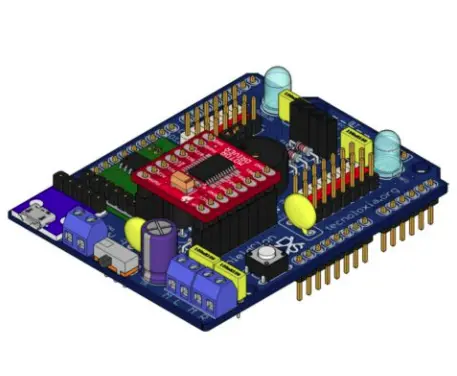
Because no matter how good the servo motor is, if the driver PCB cannot process feedback signals accurately, respond to control commands fast enough, or survive electrical noise inside the control cabinet, the entire motion system becomes unreliable.
And once that happens, customers don't care whether the issue comes from firmware, layout, or cheap components.
They only see one thing:
the machine is unstable.
That is why more OEM equipment manufacturers are paying much closer attention to the PCBA quality behind servo driver boards instead of only comparing motor specifications.
A Servo Driver Board Is Not Just Another Control PCB
A lot of buyers underestimate this board because from the outside it looks like a standard industrial controller.
In reality, a servo motor driver board handles three difficult jobs at the same time:
- receiving motion commands from the main controller,
- reading encoder feedback in real time,
- outputting precise drive signals to keep the motor locked on position.
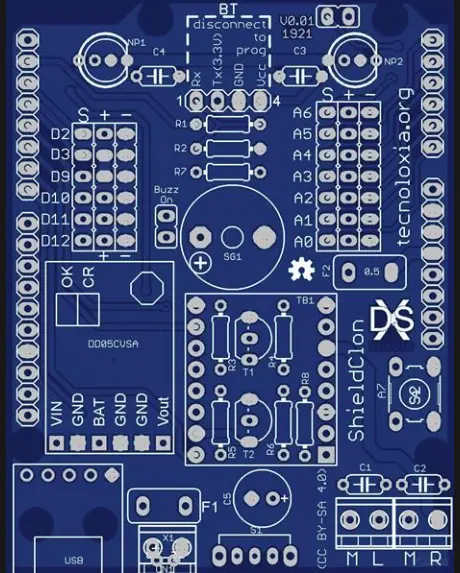
That means this board is constantly making split-second corrections.
Even a very small issue in signal processing can create visible machine problems such as:
- overshoot,
- delayed stop,
- position drift,
- inconsistent torque,
- jitter at low speed,
- repeatability failure.
This is why servo boards are much less forgiving than ordinary PLC I/O boards.
On a PLC board, one unstable signal may trigger one wrong output.
On a servo driver board, one unstable signal may affect every movement the machine makes.
What Usually Causes Servo Motion Instability? In Many Cases, It's the Board.
Customers often come to us after they already changed:
- the servo motor,
- the encoder cable,
- the controller settings.
But the machine still behaves strangely.
Then they find out the hidden issue is inside the driver PCBA.
The most common board-related causes include:
Weak Feedback Signal Processing
Encoder feedback needs extremely clean acquisition.
If the PCB layout around differential feedback lines is poor, or if filtering is not properly handled, the board starts reading noisy position information.
Then the servo loop keeps making wrong corrections.
Result:
the motor hunts, vibrates, or loses smoothness.
Power Section Heating
Servo boards deal with constant switching current.
If MOSFET layout, copper thickness, or thermal dissipation is not designed properly, the board temperature rises fast under long working hours.
What happens next is familiar to many OEMs:
- thermal alarm,
- random shutdown,
- unstable current output,
- reduced board lifespan.
And this usually does not appear during short lab testing — it appears after months in customer factories.
EMI Inside the Control Cabinet
Servo systems normally sit beside:
- contactors,
- inverters,
- switching power modules,
- relays,
- communication lines.
If the servo driver PCB lacks enough EMI suppression, grounding partition, or isolation design, noise enters the control loop.
Then you start seeing:
- unexplained encoder alarms,
- occasional position jump,
- communication timeout,
- false overcurrent warnings.
These are exactly the kind of intermittent failures that are hardest for customers to tolerate.
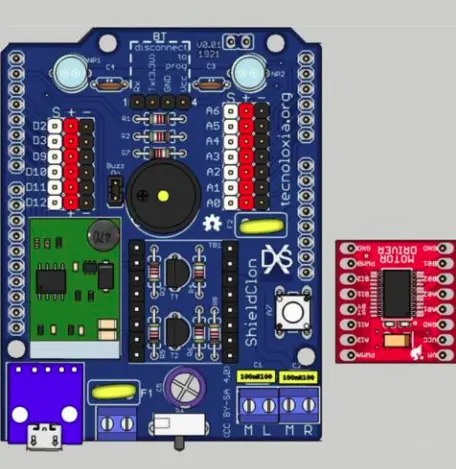 Cheap Component Substitution
This is a common supplier problem.
Some low-cost manufacturers replace:
- gate drivers,
- optocouplers,
- current sensors,
- capacitors,
- MOS tubes
with unstable alternatives to reduce BOM.
The board may pass initial functional testing.
But after continuous operation, response consistency starts to degrade.
This is where many field complaints begin.
What a Reliable Servo Motor Driver Board Should Actually Deliver
If you are sourcing servo driver PCBA for OEM machinery, the real focus should not be "does it run"?
It should be:
"can it keep running accurately after thousands of hours in a noisy industrial cabinet?"
A qualified industrial servo driver board should provide:
Fast and Clean Signal Response
Command in, feedback back, correction out — all without lag.
Stable Current Drive Under Continuous Load
No thermal drift, no unstable switching.
Good Encoder Noise Immunity
Especially important in long cable installations.
Strong Protection Design
Overcurrent, overvoltage, short circuit, overheating.
Industrial Communication Compatibility
CAN, RS485, EtherCAT, pulse/dir, depending on machine architecture.
Long-Term Assembly Reliability
No weak solder joints on power devices or vibration-sensitive connectors.
This is where board manufacturing experience matters much more than many buyers expect.
Why Many OEM Buyers Change Servo Driver Board Suppliers After Field Failures
This is something we hear often:
"Our old supplier’s samples looked fine, but mass production failure rate became a problem."
That happens because servo driver boards are not simple consumer PCBs.
Mass production consistency is difficult because the board contains:
- power devices,
- high-speed signals,
- heat concentration,
- firmware interaction,
- industrial connectors.
Without strong PCBA process control, batch-to-batch differences become visible in the field.
Typical OEM complaints include:
- some machines run hotter than others,
- certain boards show random alarms,
- motion smoothness is inconsistent,
- customer site repair rate climbs.
By the time this happens, the real cost is no longer the PCB price.
The real cost is:
- after-sales service,
- machine downtime,
- damaged customer trust.
What We Do as a Servo Motor Driver Board PCBA Manufacturer
For this type of industrial motion board, simple SMT assembly is not enough.
We work from the engineering failure points backwards.
Our OEM manufacturing service includes:
- industrial PCB DFM review,
- power trace optimization,
- heat dissipation evaluation,
- original driver/MOS sourcing,
- SMT & DIP assembly,
- firmware loading,
- dynamic load simulation,
- long-hour aging test,
- connector vibration inspection,
- full function verification before shipment.
In short:
we help customers reduce the kind of field motion problems that usually show up only after the machine is sold.
And for OEM equipment brands, that matters much more than saving a few dollars on board cost.
Need a More Reliable Servo Motor Driver Board Supplier?
If you are building:
- CNC equipment,
- automated conveyors,
- robotic modules,
- packaging machines,
- AGV systems,
- or any industrial motion platform,
and your current servo board supplier is giving you unstable quality, inconsistent batches, or too many field complaints,
we can help you build a more dependable PCBA solution.
Talk to our engineering team about custom servo motor driver board manufacturing.
Shenzhen Kingsheng Technology Co., Ltd. has rich experience and a professional technical team in PCBA.
Contact KingshengPCBA today to request a quote or discuss your PCBA project.
 +86 13828766801
 kspcba@c-alley.com
 https://www.kingshengpcba.com/
 2/F, Building 6, Tangtou 3rd Industrial Zone, Tangtou Community, Shiyan Town, Baoan District, Shenzhen, China, 518108