CAN Bus Communication Board: Building Real-Time and Fault-Tolerant Industrial Communication Networks
As industrial automation systems become increasingly decentralized, machines are no longer controlled by a single processor. Modern equipment relies on multiple intelligent subsystems—motor drivers, sensors, HMIs, battery management units, servo modules, robotic joints, and safety controllers—all of which must communicate in real time with minimal delay and maximum reliability. Under these demanding conditions, ordinary serial communication interfaces often struggle to deliver deterministic performance.
This is why the
CAN bus communication board has become one of the most important PCB solutions for distributed industrial control systems.
Originally developed for automotive electronics, CAN (Controller Area Network) is now widely used in industrial robots, AGV systems, energy storage equipment, servo control, medical devices, and smart manufacturing due to its excellent anti-interference capability, multi-node communication support, and built-in fault detection mechanism. CAN remains a preferred field-level communication standard where robust short-packet real-time control is essential.
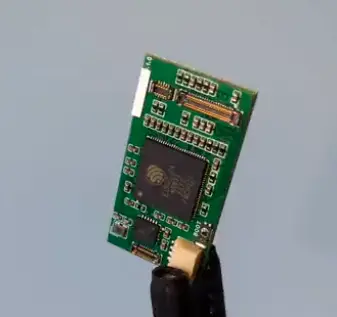 What Is a CAN Bus Communication Board?
A CAN bus communication board is an embedded PCB module that integrates:
- CAN controller interface,
- CAN transceiver IC,
- differential bus protection,
- MCU communication management,
- termination network,
- and industrial power filtering.
Its primary function is to convert digital controller data into CAN differential signals and enable secure message exchange among multiple intelligent devices connected on the same bus. Unlike point-to-point UART communication, CAN bus allows:
- multi-master communication,
- priority-based message arbitration,
- automatic retransmission,
- CRC error detection,
- fault confinement.
This means every connected node can send or receive data efficiently without collision destroying network stability.
Because of this architecture, CAN communication is highly suitable for mission-critical control environments where communication latency or packet corruption can directly affect machine safety and operational precision.
Why CAN Bus Is Critical in Modern Industrial Equipment
Industrial OEM customers increasingly adopt CAN bus PCBs because modern machines require:
Deterministic Real-Time Response
Servo feedback, battery alarms, motor commands, and sensor triggers must be transmitted instantly.
Strong EMI Resistance
Differential signaling allows stable communication in electrically noisy environments filled with VFDs, switching supplies, and heavy current loads.
Multi-Node Expansion
A single CAN network can connect numerous distributed slave modules without complicated wiring.
Automatic Error Handling
CAN protocol includes:
- bit monitoring,
- frame check,
- acknowledgement,
- cyclic redundancy check,
- fault isolation.
This dramatically improves field communication reliability.
Reduced Wiring Complexity
Instead of many point-to-point signal lines, a two-wire differential bus simplifies harnesses and lowers installation cost.
For these reasons, CAN boards are now extensively deployed in:
- industrial robotics,
- AGV/AMR vehicles,
- lithium battery systems,
- elevator controllers,
- smart agricultural machinery,
- CNC servo coordination systems.
Key PCB Design Features of a High-Quality CAN Bus Communication Board
Industrial CAN communication PCB is far more than simply installing a CAN transceiver chip.
A professional OEM CAN board must address several engineering challenges:
Differential Pair Routing
CANH and CANL traces must maintain impedance consistency to reduce signal reflection and ensure waveform integrity.
Bus Termination Network
Standard 120Ω terminal resistance is required to prevent communication distortion over long wiring harnesses.
Surge and ESD Protection
Industrial CAN lines are exposed to:
- cable hot-plug,
- external surge,
- inductive spikes,
- electrostatic discharge.
TVS arrays and transient suppressors are essential.
Galvanic Isolation
Isolated CAN boards are increasingly used where high common-mode voltage or noisy ground loops exist.
Power Filtering Design
Stable DC/DC conversion and LC filtering protect communication from conducted noise.
Industrial Connector Reliability
Field pluggable terminal blocks or automotive-grade connectors improve long-term installation stability.
Protocol MCU Debugging
The board must guarantee message timing, arbitration handling, and fault frame recovery.
Poor PCB layout can lead to:
- frame loss,
- arbitration errors,
- intermittent node offline issues,
- bus-off faults.
Typical Applications of CAN Bus Communication Boards
A custom CAN bus PCB is widely integrated into:
Industrial Robot Joint Controllers
Motor drive synchronization and sensor feedback.
AGV / Autonomous Mobile Robots
Distributed wheel control and battery management communication.
Energy Storage Systems
BMS module networking and inverter communication.
Servo Motor Driver Networks
Real-time command broadcasting.
Elevator and Lift Controllers
Multi-floor distributed control.
Medical Automation Equipment
Reliable subsystem status transmission.
Smart Vehicle Electronics
Charging modules, body control, diagnostic interfaces.
Common OEM Manufacturing Challenges in CAN Communication PCBs
For many overseas buyers, communication board issues usually do not appear during lab tests—they appear after installation.
Common failures include:
- bus instability under long cable conditions,
- connector oxidation causing intermittent contact,
- ESD damage on field terminals,
- CAN transceiver inconsistency,
- insufficient isolation distance,
- poor soldering on communication ports.
This is why industrial customers now prefer CAN PCB suppliers that can provide:
- industrial-grade PCB stack-up design,
- original transceiver sourcing,
- communication protocol verification,
- EMC optimization,
- environmental aging test,
- node-to-node transmission reliability test.
Because in real industrial applications, one unstable communication node can paralyze the entire distributed network.
Why Choose an Experienced PCBA Supplier for CAN Bus Communication Boards
A CAN bus communication board is the data highway of distributed automation systems.
Its long-term reliability depends on:
- PCB signal integrity,
- industrial component quality,
- protection design,
- SMT consistency,
- communication debugging,
- functional burn-in verification.
As a professional PCBA manufacturer, we offer one-stop OEM/ODM production for industrial CAN communication boards, including:
- multilayer PCB fabrication,
- SMT & DIP assembly,
- CAN transceiver sourcing,
- isolated power integration,
- firmware loading,
- protocol debugging,
- node communication test,
- full aging reliability verification.
We help global automation manufacturers build robust CAN communication interfaces with faster product development and lower field maintenance risk.
Looking for a Custom CAN Bus Communication Board Manufacturer?
Whether your project involves:
- AGV controllers,
- robotic communication modules,
- industrial servo systems,
- battery management electronics,
- intelligent machinery,
- distributed control units,
our engineering team can provide customized CAN communication PCB assembly and scalable OEM production services.
Contact us today for your industrial CAN bus communication board manufacturing solution.
Shenzhen Kingsheng Technology Co., Ltd. has rich experience and a professional technical team in PCBA.
Contact KingshengPCBA today to request a quote or discuss your PCBA project.
 +86 13828766801
 kspcba@c-alley.com
 https://www.kingshengpcba.com/
 2/F, Building 6, Tangtou 3rd Industrial Zone, Tangtou Community, Shiyan Town, Baoan District, Shenzhen, China, 518108