Analysis of the Functional Applications and Technical Specifications of Digital Blood Pressure Monitor PCB Assemblies
As awareness of home health management continues to grow, electronic blood pressure monitors have become a standard item of medical and health equipment in the home, widely used in scenarios such as home self-monitoring, care homes and community healthcare. As the core component of electronic blood pressure monitors, the PCBA circuit board performs key functions including signal acquisition, data processing, pressure control, LCD display, voice announcements and power management. The quality of its design, board specifications and manufacturing precision directly determine the accuracy, stability and service life of blood pressure measurements.
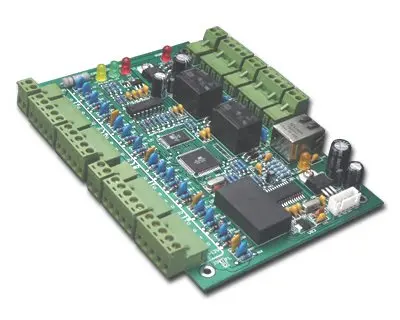 1. Overall Composition and Main Control Board Functions
The overall structure of an electronic blood pressure monitor is straightforward, comprising three main components: the main control and measurement PCBA, the button and display panel, and the small circuit board for the air pump and solenoid valve. The main control board serves as the central hub of the blood pressure monitor, housing a microcontroller (MCU), pressure sensor signal processing circuits, amplification and filtering circuits, memory chips, and clock circuits. It captures faint analogue signals of pulse and pressure from changes in cuff air pressure; after amplification, filtering, and analogue-to-digital (AD) conversion, built-in algorithms calculate systolic and diastolic blood pressure values and heart rate, whilst simultaneously performing data storage and retrieval of historical records. The button and display board is responsible for triggering function keys and driving the LCD or digital display, enabling mode switching, measurement start/stop, and real-time value display. The air pump drive board specifically controls the inflation pump and the exhaust solenoid valve, precisely regulating inflation pressure and deflation speed to ensure a smooth measurement process and accurate data.
2. Performance Requirements for Medical-Grade PCBA
As a medical-grade consumer electronic device, the blood pressure monitor PCBA must meet extremely high standards in terms of stability, interference resistance, low power consumption and high accuracy. It must not suffer from issues such as signal drift, measurement errors or standby leakage current. As it is particularly suited for long-term daily use by the elderly, it must be capable of prolonged standby and normal operation in low-temperature environments.
3. Standard PCBA Specifications and Materials
Regarding standard specifications for PCBA, there are clear industry configuration standards for domestic electronic blood pressure monitors. The PCB material generally utilises eco-friendly FR-4 flame-retardant boards with a high Tg (Tg ≥ 130°C), which are characterised by moisture resistance, resistance to ageing and minimal warping. These boards are suitable for indoor ambient temperatures as well as the cooler conditions of autumn and winter, with an operating temperature range of 0°C to 55°C. Conventional blood pressure monitors typically utilise 2-layer PCBs for both the main control board and the keypad, whilst high-end smart voice-activated models employ 4-layer precision PCBs. Standard board thickness ranges from 1.0 mm to 1.6 mm, enabling a compact and lightweight design for the entire device.
4. Electrical Specifications and Surface Treatment
In terms of electrical specifications, the circuit board uses 1 oz (35 μm) standard copper thickness. Signal traces are fine and uniform, with a minimum line width and spacing of 0.1 mm. The analogue signal area features isolated routing to minimise interference from digital circuits, ensuring accurate pressure sensor signal acquisition. Surface treatment typically employs OSP anti-oxidation or tin-plating processes, offering excellent value for money and reliable solder joints; High-end medical-grade blood pressure monitors utilise an immersion gold plating process to enhance long-term oxidation resistance, preventing faults such as poor button contact or display malfunctions.
5. Low-Power Design and Protective Features
To meet battery power requirements, the blood pressure monitor’s PCBA employs a low-power circuit design, supporting both dry cell and rechargeable lithium-ion battery modes. An on-board low-voltage detection circuit monitors battery levels in real time and alerts the user when charging or battery replacement is required. Additionally, the circuit boards incorporate EMC interference suppression design, effectively shielding against electromagnetic interference from mobile phones and household appliances, thereby preventing measurement fluctuations and significant errors. Some medical-grade blood pressure monitor PCBs also undergo triple-proof coating treatment to provide moisture and oxidation resistance, extending their service life in humid environments.
6. Future Development Trends
Current electronic blood pressure monitors are undergoing upgrades to include features such as smart connectivity, Bluetooth data upload, WeChat health synchronisation, voice announcements and dual-user memory, placing higher demands on PCBA integration, miniaturisation, low power consumption and signal anti-interference capabilities. Streamlined circuit integration design and high-precision analogue signal routing have become the mainstream trends in the development of blood pressure monitor PCBs.
In summary, the PCBA serves as the core hardware foundation of electronic blood pressure monitors. The choice of board material, layer structure, routing techniques and low-power design directly impact measurement accuracy and product durability. Standardised PCBA specifications and rigorous circuit design are fundamental to ensuring the accuracy of blood pressure readings, safe operation and long-term reliability.
Shenzhen Kingsheng Technology Co., Ltd. has rich experience and a professional technical team in PCBA.
Contact KingshengPCBA today to request a quote or discuss your PCBA project.
 +86 13828766801
 kspcba@c-alley.com
 https://www.kingshengpcba.com/
 2/F, Building 6, Tangtou 3rd Industrial Zone, Tangtou Community, Shiyan Town, Baoan District, Shenzhen, China, 518108