Smart Robot PCBA: Core Architecture, Specifications and Technical Highlights
Intelligent robots are complex electronic systems that integrate environmental perception, decision-making and control, and motion execution, whilst PCBA (printed circuit board assemblies) serve as their 'nerve centre' and 'power framework', performing core functions such as signal transmission, computational processing, power distribution and drive control. A typical intelligent robot is equipped with 20 to 30 PCBA units with different functions, covering modules such as the main controller, drivers, power supply, sensors and communications. The level of design and manufacturing directly determines the robot’s stability, precision and degree of intelligence.
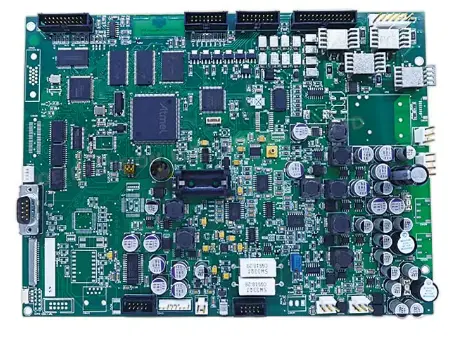 I. Core Functional Modules of Intelligent Robot PCBA
Intelligent robot PCBA can be divided into five core functional modules, each performing its own specific role whilst working in concert to form a complete control system.
1. Main Control Board (The Brain)
As the robot’s core control unit, the main control board integrates high-performance processors, AI computing chips and a wide range of interfaces. It is responsible for running the operating system, processing sensor data, executing motion algorithms and coordinating the robot’s overall operations. High-end humanoid robot control boards typically utilise 16–28-layer high-frequency, high-speed boards, equipped with multi-core CPUs and NPUs, delivering computing power of up to tens of TOPS and supporting complex AI applications such as machine vision and natural language processing.
2. Joint Drive Board (Limbs)
The drive board is the core of the robot’s motion execution. It receives commands from the main control board and drives actuators such as motors and servos to achieve precise motion control. Joint drive boards for industrial collaborative robots are typically 8–12-layer HDI boards, featuring thick copper design and thermal-electrical separation processes to accommodate high current and heat dissipation requirements; humanoid robot joints also commonly use rigid-flex boards to replace traditional cables, enhancing reliability during bending.
3. Power Management Board (The Heart)
The power management board is responsible for the distribution of electrical energy throughout the robot. It converts the battery input voltage (e.g. 12V/24V) into stable voltages such as 5V, 3.3V and 1.8V required by various modules. It also incorporates overvoltage, overcurrent, reverse connection protection and surge protection functions to ensure a safe and stable power supply for the system.
4. Sensor Board (Sensory Organs)
The sensor board integrates interfaces for sensors such as LiDAR, cameras, IMUs (Inertial Measurement Units), ultrasonic sensors and infrared sensors, enabling environmental perception, positioning, navigation and obstacle avoidance. Such PCBs require high-density routing and high-precision impedance control to ensure the high-speed and stable transmission of sensor signals. 5. Communication Interface Board (Neural Link)
The communication board is equipped with Wi-Fi, Bluetooth, Ethernet, 4G/5G and other communication modules, enabling data exchange between the robot and the cloud, mobile devices and other equipment, and supporting remote control, firmware updates and data transmission.
II. Key Specifications and Parameters for Intelligent Robot PCBA
1. Board Selection
- Main control board: High Tg FR-4 (Tg ≥ 170°C) or high-frequency board (e.g. RO4350B), with a temperature range of -40°C to 125°C, high thermal deformation resistance, and suitable for 24-hour continuous operation.
- Driver Board: Aluminium or ceramic substrate with thermal conductivity ≥2 W/m·K, reducing the temperature of the core driver chip area by 8–10°C to address high-current heat dissipation challenges.
- Joint board: Rigid-flex board, with a bending cycle life of >10,000 cycles, suitable for flexible joint movement.
2. Layer Count and Board Thickness
- Main control board: 8–28 layers (typically 12–16 layers), board thickness 1.6–3.2 mm, featuring high-density integration of core chips and interfaces.
- Driver Board: 6–12 layers, board thickness 1.6 mm, with locally thickened copper areas to enhance current-carrying capacity.
- Sensor/Communication Board: 2–4 layers, board thickness 1.0–1.6 mm, featuring a compact design to fit into confined spaces.
3. Copper Foil Thickness and Routing Precision
- Copper foil: 1 oz (35 μm) for signal layers; 2–4 oz (70–140 μm) for power/driver layers; current-carrying capacity ≥15 A to minimise heat loss from high currents.
- Routing: Minimum line width/spacing 3 mil (0.076 mm), differential pair length tolerance ≤5 mil, impedance control accuracy ±5%, ensuring high-speed signal integrity.
- Via Sizes: Mechanical drilling ≥0.2mm, laser microvias ≤0.1mm, suitable for miniaturised components.
4. Surface Treatment and Reliability
- Surface Treatment: ENIG (electroless gold plating) suitable for fine-pitch BGA/QFP devices; gold fingers enhance connector insertion/removal reliability; OSP reduces costs.
- Environmental Reliability: Operating temperature -20°C to +70°C (industrial grade -40°C to +125°C), humidity 95% at 40°C (non-condensing), resistant to vibration, shock, dust and oil contamination.
- Certifications: Compliant with industry standards such as RoHS, CE and EMC, ensuring electromagnetic compatibility and environmental friendliness.
III. Specification Reference for Typical Application Cases
Taking commercial service robots and small humanoid robots as examples, the core PCBA specifications are as follows:
1. Commercial service robots (cleaning/food delivery)
- Main control board: 4–6-layer FR-4, board thickness 1.6 mm, dimensions 76 × 66 mm; Main controller: STM32F407 (168MHz) or ESP32, with integrated Wi-Fi/Bluetooth; interfaces include I²C, SPI, UART and GPIO.
- Driver board: 4-layer aluminium substrate, 1.6mm thick, dimensions 100×80mm; input 12–24V, output 5A per channel, supporting control of 4 DC motors or 2 servos.
- Power supply board: 2-layer FR-4, 1.0mm thick, 12V input, 5V/3A and 3.3V/2A output, with overcurrent and reverse polarity protection.
2. Small humanoid robot (education/research)
- Main Control Board: 8-layer HDI, board thickness 1.6mm, dimensions 150×120mm; 6-core A78AE CPU + 4-core R52 MCU, NPU computing power 80TOPS, integrated Gigabit Ethernet, USB 3.0 and HDMI interfaces.
- Joint drive board: 8-layer rigid-flex design, board thickness 1.2mm (rigid section)/0.2mm (flexible section), dimensions 50×40mm; 24V input, 8A output per channel, supporting precise control of servo motors.
Ⅳ. Technological Trends
With the advancement of AI, semiconductor and advanced manufacturing technologies, smart robot PCBA is evolving towards high-density integration, high-speed and high-frequency operation, slim and lightweight designs, high reliability and intelligent functionality. Processes such as high-level HDI, rigid-flex, buried resistors and capacitors, and localised thick copper are being widely adopted. At the same time, PCBA is becoming deeply integrated with AI chips and sensors, with integration levels and computing power continuing to rise, enabling robots to perform increasingly complex intelligent applications.
In summary,
smart robot PCBA is a technology-intensive product that integrates technologies from multiple fields, including electronic design, materials science, precision manufacturing and reliability engineering. Its specification design must balance performance, cost, space and environmental adaptability, whilst robots for different application scenarios require customised PCBA solutions to meet diverse requirements. As technology continues to advance, PCBA will continue to empower smart robots to develop in the direction of greater intelligence, stability and efficiency.
Shenzhen Kingsheng Technology Co., Ltd. has rich experience and a professional technical team in PCBA.
Contact KingshengPCBA today to request a quote or discuss your PCBA project.
 +86 13828766801
 kspcba@c-alley.com
 https://www.kingshengpcba.com/
 2/F, Building 6, Tangtou 3rd Industrial Zone, Tangtou Community, Shiyan Town, Baoan District, Shenzhen, China, 518108