PCBA Design for Pool Cleaning Robots: 3 Key Factors That Determine Cleaning Efficiency and Reliability
As the market for household pool cleaning robots continues to heat up, more and more PCBA manufacturing facilities are receiving related prototyping and mass production orders. Drawing from years of experience working on pool cleaning robot projects, I would like to share some often-overlooked yet critical design points regarding these circuit boards.
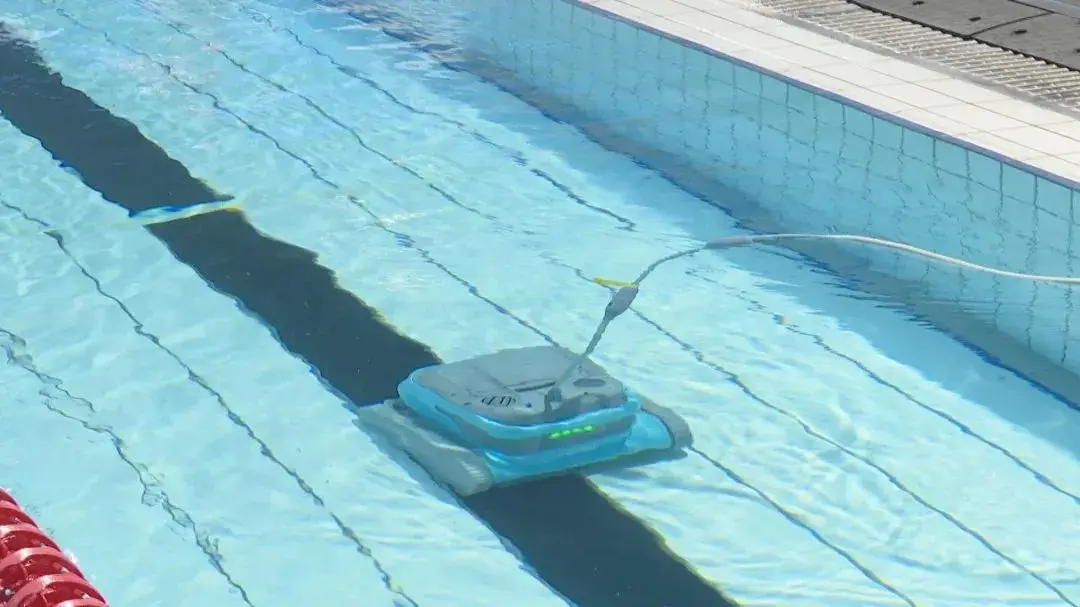 Ⅰ.The Challenges of an Underwater Environment for PCBA Are Far Greater Than Imagined
Pool cleaning robots operate in humid, chlorine-rich environments with significant temperature variations. The protection requirements for their circuit boards are far higher than those for ordinary household appliances. Many clients new to this field tend to underestimate this.
The choice and application process of conformal coating are the primary considerations. Conventional acrylic-based conformal coatings tend to peel off after prolonged immersion in chlorinated water. A silicone-modified polyurethane system is recommended, with coating thickness controlled between 75–100 μm. Key interfaces and connector pins require a second spray application to prevent liquid ingress via capillary action.
Additionally,
blind and buried via designs offer inherent advantages in underwater PCBA. By reducing the number of through-holes, the pathways for moisture to penetrate along via walls are effectively minimized. For projects with sufficient budget, full-board resin plugging combined with electroplated via filling is recommended. This increases costs by approximately 8–12%, but reduces rework rates by over 40%.
Ⅱ.Heat Dissipation Balance in Motor Drive and Power Management
Pool cleaning robots typically feature drive motors, brush deck motors, and water pump motors, with instantaneous currents reaching 10–15 A. Separating power ground from signal ground on the PCBA is fundamental, but what truly determines long-term reliability is the combination of copper thickness and thermal via design.
It is recommended that the copper thickness at the drive level be no less than 2 oz, with densely arranged thermal vias (0.3–0.4 mm) beneath key MOSFETs. The via diameter should not be too large, otherwise solder paste may leak through during reflow soldering. The other end of the thermal vias connects to an exposed copper area on the bottom layer, which transfers heat to the robot’s waterproof housing via thermally conductive silicone pads.
Interestingly, some clients request that all power devices be concentrated at the board edge for easier heat dissipation. However, in actual use of pool cleaning robots, the board edge is closer to the housing seams, increasing moisture ingress risk. A more rational approach is to concentrate heat sources near the center of the PCB, allowing heat to spread evenly across the entire copper plane.
Ⅲ.Sensor Signal Integrity and Protection
Pool cleaning robots rely on gyroscopes, accelerometers, Hall sensors (for wheel speed detection), and anti-fall infrared sensors. These sensors are typically distributed across different locations on the PCBA, and long signal traces running close to power lines are a common problem.
A practical rule of thumb: route sensor signal lines with ground on both sides, and add ground vias every 5 mm to connect to the inner layer reference ground. For vibration-sensitive devices like gyroscopes and accelerometers that output I2C signals, it is recommended to add a 100 Ω resistor in series near the sensor, along with a 4.7 pF capacitor to ground, which effectively suppresses RF interference.
Additionally, all external connectors (motor interfaces, sensor interfaces) must include TVS diodes and RC snubber circuits. Motor start/stop cycles in pool water can generate inductive kickback voltages of several hundred volts — many PCBA rework cases stem from neglect of this detail.
Key Manufacturing Collaboration Points
As a manufacturing facility, when reviewing pool cleaning robot PCBA design files, it is advisable to proactively confirm the following three items with the client:
- Whether the panelization method allows for post-routing edge burr treatment space (to prevent internal circuit damage from routing stress).
- Whether all test points are placed on a single side and kept away from conformal coating areas.
- Whether any moisture-sensitive components in the BOM require individual vacuum packaging.
The pool cleaning robot market continues to grow rapidly, and as the "brain and nervous system" of these devices, PCBA design quality directly determines the product's service life and user experience. I hope these insights are helpful to those developing or optimizing related products.
Shenzhen Kingsheng Technology Co., Ltd. has rich experience and a professional technical team in PCBA.
Contact KingshengPCBA today to request a quote or discuss your PCBA project.
 +86 13828766801
 kspcba@c-alley.com
 https://www.kingshengpcba.com/
 2/F, Building 6, Tangtou 3rd Industrial Zone, Tangtou Community, Shiyan Town, Baoan District, Shenzhen, China, 518108