An In-Depth Analysis of Commercial Water Dispenser PCBA | PCB Specification Design and Logic for Stable Operation of the Complete Unit
Commercial water dispensers are widely used in public settings such as office buildings, schools, hospitals, factories and government service centres. They are characterised by high-frequency water dispensing, 24-hour standby operation, continuous heating and cooling, and operation in high-humidity, enclosed environments. As the core of the unit’s electronic control system, the PCB assembly (PCBA) of a commercial water dispenser directly determines the equipment’s safety, durability and operational precision through its PCB hardware specifications, circuit design and component configuration. Unlike simple control boards for domestic use, commercial PCBA units are subject to strict standardisation requirements regarding PCB base materials and electrical specifications.
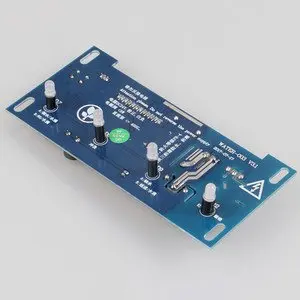 1. Core PCB Specifications for Commercial Water Dispensers
Regarding core PCB specifications, the mainboards of commercial water dispensers uniformly utilise FR-4 high-flame-retardant fibreglass laminate. Unlike the cheaper CEM-3 composite laminate, this material achieves a V0 flame-retardant rating, offering high heat resistance and strong insulation, making it suitable for the long-term high-temperature and high-humidity environment inside the water dispenser. Conventional commercial models typically use a two-layer PCB structure, whilst complex IoT models and high-power water heaters employ a four-layer PCB layout, with the power layer and signal layer separated to prevent high-voltage interference with low-voltage circuits. The standard copper foil thickness is 1 oz (35 μm) industrial-grade thickened copper foil. In areas with high-current circuits, the thickness is locally upgraded to 2 oz to support the high-current loads of heating elements, compressors and solenoid valves, thereby preventing circuit burnout or copper foil detachment caused by prolonged high-current heating.
2. Solder Mask, Surface Treatment, and Trace Layout
Solder mask application is just as critical as surface treatment. Commercial PCBA boards utilise eco-friendly, matt-finish solder mask ink that is resistant to oxidation, acids and alkalis, and offers protection against moisture and mould, effectively warding off damage from water vapour and condensation; the pads are tin-plated to provide oxidation resistance, facilitate soldering, and simplify future repairs and component replacement. The trace layout strictly separates high-voltage and low-voltage zones. High-voltage power supply circuits and heating drive circuits are concentrated in a specific area, physically isolated from low-voltage circuits such as temperature sensing, water level detection and signal acquisition. Trace widths and spacing are designed in accordance with safety standards, with high-voltage traces having a width of ≥1.5mm. Creepage distances and clearances meet regulatory requirements, eliminating issues such as leakage, arcing and crosstalk.
3. Circuit Functionality and Control Logic
In terms of circuit functionality, the commercial water dispenser’s PCBA integrates an MCU main control unit, an AC-DC power supply module, an NTC temperature sensing circuit, a water level detection circuit, a relay drive circuit, sterilisation lamp control, inlet solenoid valve control, and an overload protection unit. Utilising a combination of precision sensing resistors, filter capacitors and varistors, the system monitors the temperatures of the hot and cold water tanks, the water level in the reservoir and the water pressure in the pipes in real time, enabling precise control of heating activation and deactivation, constant-temperature maintenance and automatic shutdown in the event of low water levels.
4. Environmental Protection: Triple-Proof Coating and Mechanical Design
Commercial environments are typically damp and dusty; therefore, the PCB comes factory-fitted with a standard triple-proof coating process. The nano-triple-proof coating provides full insulation protection, offering defence against moisture, corrosion and static electricity, thereby preventing short circuits and the corrosion and ageing of components caused by condensation. Additionally, the PCB features standardised mounting holes, locating pins and waterproof connectors, making it suitable for installation within the confined spaces of water dispensers, whilst ensuring neat cabling and resistance to vibration and loosening.
5. Safety Protection and Reliability
Safety protection is the fundamental requirement in commercial PCBA design. The PCB is equipped with on-board high-voltage fuses, varistors and safety-rated capacitors, complemented by dual hardware and software protection against overvoltage, overcurrent, dry-running and overheating. A stable PCB substrate, a rational layer stack-up structure and a standardised design for the isolation of high- and low-voltage circuits, combined with mature control software, enable commercial water dispensers to operate continuously at high frequency over the long term, thereby reducing after-sales failure rates. This is the key to quality enhancement for water dispenser manufacturers.
Shenzhen Kingsheng Technology Co., Ltd. has rich experience and a professional technical team in PCBA.
Contact KingshengPCBA today to request a quote or discuss your PCBA project.
 +86 13828766801
 kspcba@c-alley.com
 https://www.kingshengpcba.com/
 2/F, Building 6, Tangtou 3rd Industrial Zone, Tangtou Community, Shiyan Town, Baoan District, Shenzhen, China, 518108