From Rigid to Flexible: Decoding the "Skeletal" Secrets of Exoskeleton Robot PCBA
Introduction
As an engineer with years of experience in the PCBA manufacturing industry, I have witnessed countless iterations of electronic products. But if there is one field where PCB technology has moved from "behind the scenes" to "center stage"—even becoming part of the mechanical structure—it is exoskeleton robots.
Whether it's a medical rehabilitation robot helping paraplegic patients walk again or an industrial logistics suit protecting workers' lower backs, they all share a vital lifeline: the PCBA.
Today, instead of vague concepts, let's dive directly into the physical layer of the PCBA and explore the core challenges our factory must overcome when prototyping and mass-producing such boards.
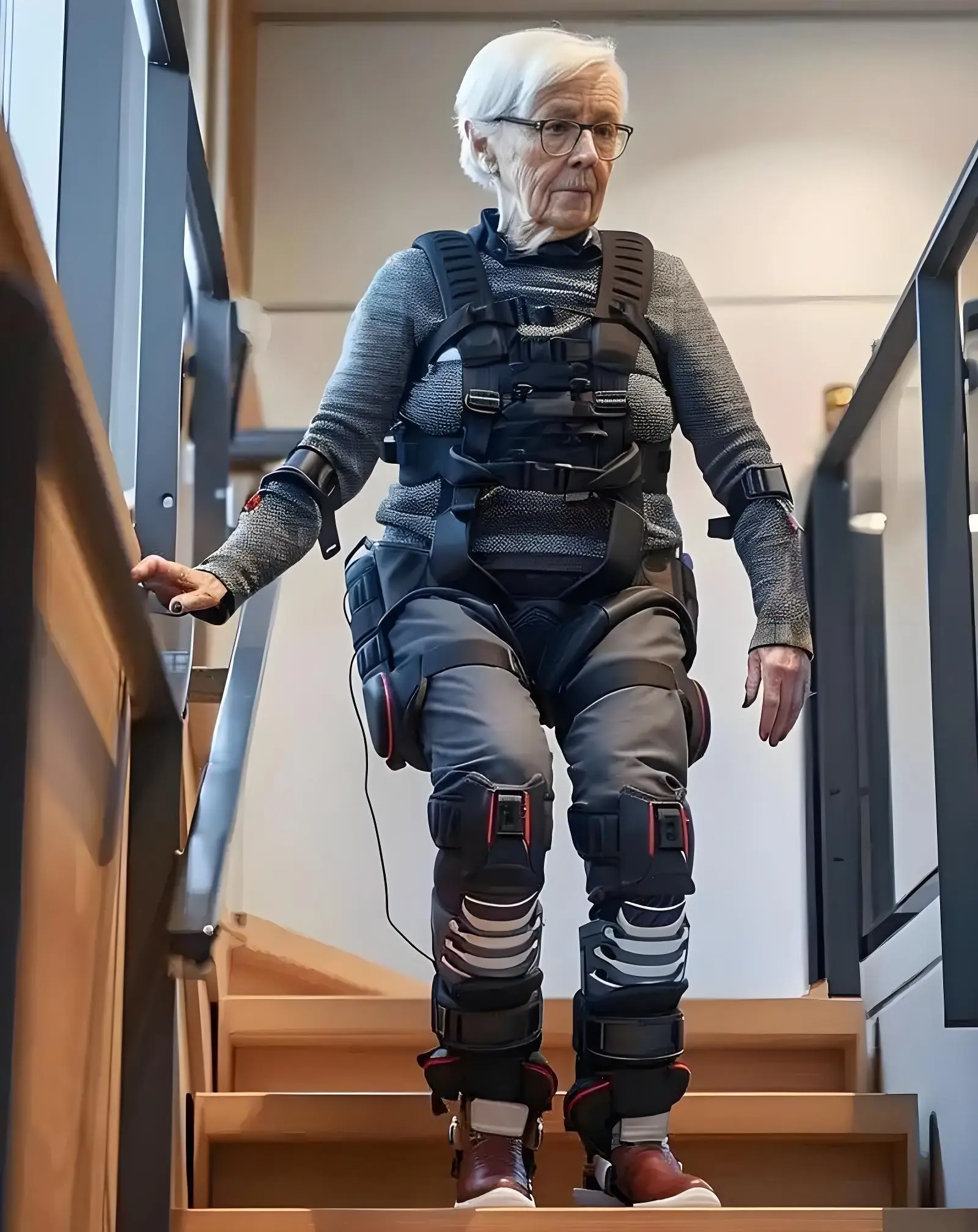 Ⅰ. Why Does an Exoskeleton Need a "Flexible" Nervous System?
Traditional PCBs are rigid and work fine inside a stationary enclosure. But exoskeletons are worn on the body, constantly moving with human joints (knees, elbows). If the circuit board were rigid, solder pads would crack, and signals would be lost after just a few bends.
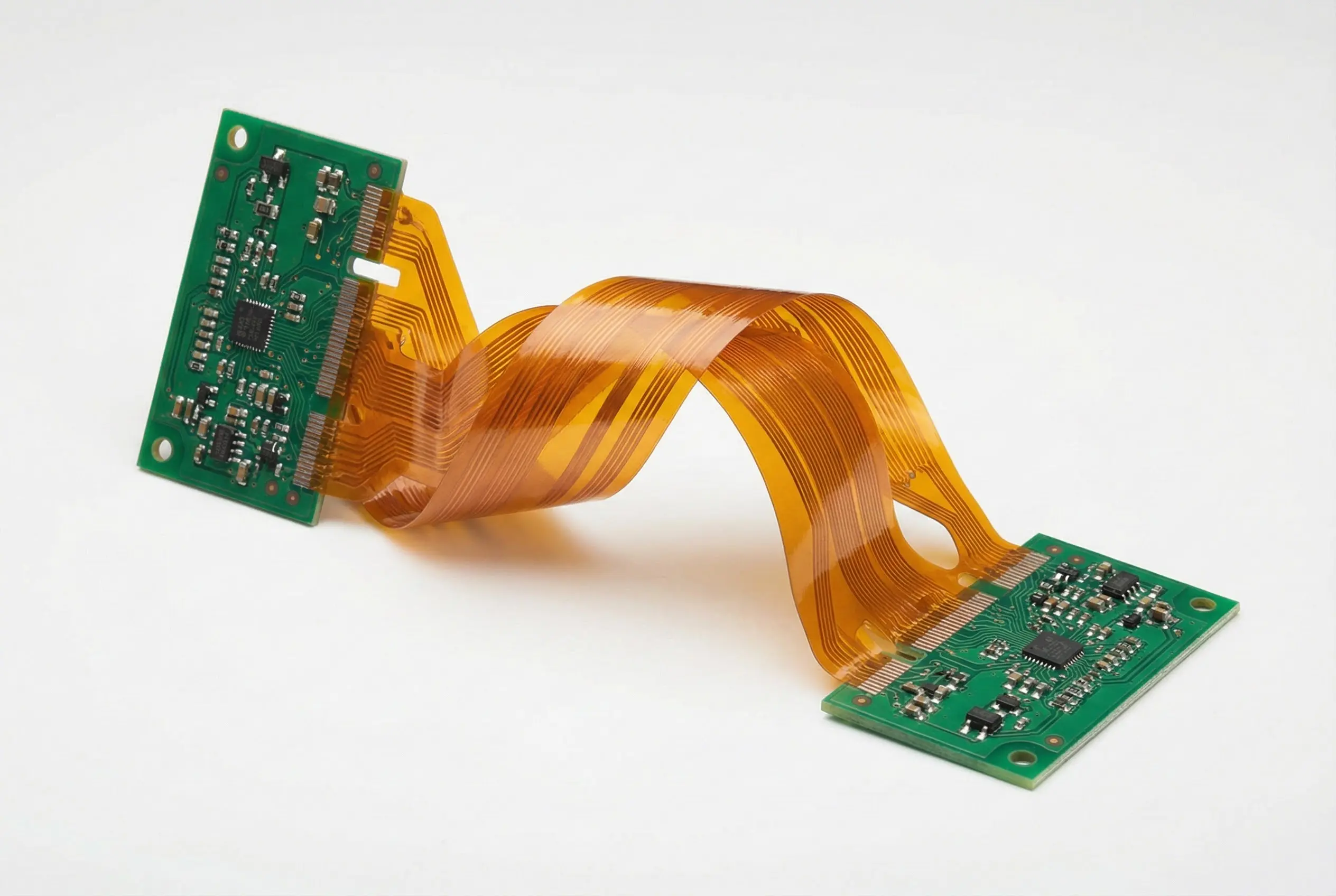
For exoskeleton joints, we typically recommend a rigid-flex board solution.
Flexible areas: Located at joint bends, made of polyimide (PI) substrate—foldable like paper, with a required bending life of over 100,000 cycles.
Rigid areas: Used for the main control chip, power management module, and motor drive circuit.
This design is not just for bending resistance—it also enables 3D stereo assembly. The internal space of an exoskeleton is extremely limited. Rigid-flex boards act like bridges, connecting rigid boards on different planes, eliminating connectors and cables. This is critical for reducing wearing weight—every gram lighter means less burden on the user.
Ⅱ. High Integration: A "Strongman" in a Small Volume
An exoskeleton is essentially a high-precision servo control system. A typical drive PCBA integrates three major "pillars":
1. Power and drive layer: Exoskeletons need to output torque to support body weight, with currents often exceeding 10A. This imposes requirements on PCB copper thickness. Standard boards use 1 oz copper, but for motor drive lines, we often need 2 oz or even 3 oz thick copper to prevent overheating and burnout under high current.
2. Sensing and perception layer: The exoskeleton must "understand" human intent, relying on high-precision IMUs (Inertial Measurement Units) and force sensors. On the PCBA layout, this requires physical isolation of sensors from motor drive areas, plus differential routing to shield electromagnetic interference generated by the motors. Otherwise, sensor data will be pure noise.
3. Control and communication layer: Multiple joints must coordinate synchronously, relying on CAN bus or EtherCAT protocols. In PCB manufacturing, this requires strict impedance control (e.g., 120Ω ±10%) to ensure high-speed signal transmission without distortion.
Ⅲ. The "Hard Metrics" of Medical-Grade Manufacturing
If it’s consumer electronics, good appearance and basic functionality may suffice. But exoskeletons are mostly medical devices or industrial safety equipment.
In our factory, taking on such orders requires ISO 13485 (Medical Device Quality Management System) as an entry threshold. This means full traceability—from material storage to SMT assembly. One easily overlooked pain point is component selection. Exoskeletons are often used outdoors or in complex environments. Ordinary commercial-grade capacitors may stop working below 0°C. We usually recommend industrial-grade or automotive-grade components to ensure stable operation from -20°C to +85°C.
Ⅳ. Our Manufacturing Advantages and Quality Control
As a PCBA factory, facing such high-complexity products as exoskeletons, our role is not just "contract manufacturing" but also "solution provider":
FPC/Rigid-Flex experience: We have the capability for flexible board SMT with over 100,000 bend cycles, especially with mature process models for controlling PI substrate expansion and contraction.
Precision soldering: For 0.4mm pitch BGAs (e.g., STM32H7 series main controllers) and tiny QFN-packaged motor driver chips, we use 3D SPI and AOI as dual safeguards to ensure soldering reliability.
Functional testing: More than just electrical continuity—we can customize ICT fixtures based on customer requirements, simulating sensor signals to ensure every PCBA is "alive" before assembly.
Conclusion
Exoskeletons represent the most compelling intersection of electronics and ergonomics. For us as a PCBA factory, every exoskeleton board shipped carries a responsibility—our soldering quality determines whether the user can take the next step steadily.
Shenzhen Kingsheng Technology Co., Ltd. has rich experience and a professional technical team in PCBA.
Contact KingshengPCBA today to request a quote or discuss your PCBA project.
 +86 13828766801
 kspcba@c-alley.com
 https://www.kingshengpcba.com/
 2/F, Building 6, Tangtou 3rd Industrial Zone, Tangtou Community, Shiyan Town, Baoan District, Shenzhen, China, 518108