Network Switches in the AI Era: How Our PCBA Factory Helps You Win the Market
The network switch market is undergoing a profound transformation. Driven by the explosive growth of AI computing, the race toward higher data center speeds, and the rise of white-box solutions, switches are no longer simple connectivity devices. They have become the critical hub that determines AI cluster performance, data center energy efficiency, and network security.
As a PCBA manufacturer specializing in high-end networking equipment, we don't just focus on order delivery—we want to help you navigate the opportunities and challenges of this technological wave. Today, let's talk about switch market trends, technologies, manufacturing challenges, and how our factory can turn these complex products into reality.
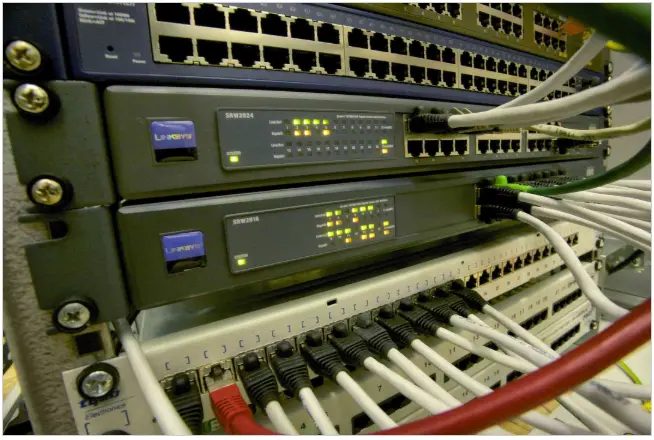 I. Market Outlook: AI Ignites a "Second Spring" for Switches
1.1 Ethernet Becomes the AI Star
I. Market Outlook: AI Ignites a "Second Spring" for Switches
1.1 Ethernet Becomes the AI Star
AI clusters traditionally used InfiniBand, but Ethernet is rapidly becoming mainstream. By 2026, Ethernet's penetration in AI backend networks is expected to reach nearly 50%. This means demand for high-speed Ethernet switches tailored for AI is booming.
1.2 Data Centers Race to 800G/1.6T
Hyperscale data centers are accelerating their transition from 400G to 800G and even 1.6T. 1.6T switches are expected to enter volume shipment this year. Meanwhile, tech giants like Google are deploying optical circuit switches at scale, using light signals for direct switching to dramatically reduce power consumption and latency—the all-optical era is approaching fast.
1.3 White-Box: A Golden Opportunity for ODM Manufacturers
Large cloud providers increasingly prefer white-box switches (decoupling hardware from software and installing their own operating systems). Currently, white-box/ODM switches account for 30%-40% of hyperscale cloud data centers. This means ODM manufacturers with strong R&D and manufacturing capabilities can now supply directly to the world's top-tier customers.
II. Key Technologies: High Speed, Optical-Electronic Integration, and Built-in Security
2.1 High-Speed Signaling: Like Race Cars on a Highway
Switch chip internal data rates now reach 112Gbps or even 224Gbps. Signals racing across circuit boards are like cars on a highway—any imperfection in the road can cause a crash. This is why PCBs must use ultra-low loss special materials with meticulously optimized routing to ensure signals maintain their integrity.
2.2 Optical-Electronic Integration: Light Replaces Copper
Traditional switches rely on electrical signals, but at high speeds, power consumption and size become problematic. This has led to Co-Packaged Optics technology—packaging optical engines directly with switch chips to enable direct optical interconnection, dramatically reducing power and latency. There are also optical circuit switches that use tiny mirrors to reflect light paths, achieving zero-latency network reconfiguration—perfect for the large-scale synchronization demands of AI training.
2.3 Built-in Security: No More Relying on External Services
Last year, a major brand's switch outage caused by DNS failure served as a wake-up call. Future switches must have security resilience built into hardware and firmware, independent of uncontrollable external services. From AI-based endpoint detection to physical-layer MACsec encryption, security has become a standard feature.
III. Manufacturing Hurdles: Three Barriers from Design to Mass Production
3.1 Signal Integrity: Every Millimeter is an Antenna
At 800G/1.6T speeds, every trace on a PCB acts like a tiny antenna—any imperfection can radiate interference or lose signal. Balancing high-density multilayer board layout while providing stable power to high-power chips is the number one design challenge.
3.2 Optical Packaging: Alignment Harder Than Embroidery
Optical switching technology demands extreme packaging precision. Coupling fiber arrays with silicon photonics chips requires micron-level alignment; otherwise, optical signals suffer massive loss. Temperature changes and mechanical stress can easily misalign optical paths, placing stringent demands on packaging processes and materials.
3.3 Heat Dissipation: Power Soaring, Air Cooling Falls Short
A high-end switch chip can consume over 500W—equivalent to a small space heater. Traditional fan cooling struggles to cope, making liquid cooling inevitable. Designing efficient liquid cooling channels without compromising signal quality is a major structural challenge.
IV. How Our PCBA Factory Helps: Turning "Impossible" into "Mass-Producible"
Facing these high barriers, our factory has comprehensive solutions ready to help you bring advanced switch products to market quickly.
4.1 Advanced Processes Tame High-Speed Signals
Class 10,000 clean rooms with controlled temperature and humidity ensure stable high-frequency material performance.
Vector Network Analyzers for 112G/224G signal testing precisely identify signal integrity issues.
Capability to process ultra-low loss materials like M7N+ and PTFE, minimizing signal loss through precision back-drilling and etching.
4.2 Full Optical Testing Leaves No Margin for Error
For optical switches, we've built test platforms integrating tunable lasers, polarization controllers, and high-precision optical power meters. We test not only electrical performance but also optical path loss and crosstalk, ensuring every device meets data center-grade reliability requirements.
Efficient Cooling Tames "Space Heater" Chips
Partnering with top thermal solution providers, we master vacuum brazing and friction welding processes to customize high-density liquid cooling plates and heat sink assemblies. Thermal simulation predicts hotspots early, ensuring high-power ASICs stay cool under any condition.
4.3 One-Stop ODM Delivery: From Drawing to Finished Product
With R&D staff comprising over 20% of our workforce, we offer full capabilities from schematic design, PCBA production, and mechanical assembly to system testing. Whether enterprise Gigabit switches or AI supercomputer 800G optical switches, we customize for you. Production capacity is flexible—from prototype runs to thousands of units daily, we handle it all with on-time delivery.
Conclusion
The 2026 network switch market belongs to the era of AI-driven, optical-electronic integration—and to ODM manufacturers with deep manufacturing capabilities.
We're not just your PCBA contractor; we're your strategic partner entering the AI data center market. Let's work together, using world-class manufacturing capabilities to transform cutting-edge network technologies into the driving force powering the digital world.
If you're planning your next-generation network switches, contact us today to discuss your manufacturing blueprint!
Shenzhen Kingsheng Technology Co., Ltd. has rich experience and a professional technical team in PCBA. Contact KingshengPCBA today to request a quote or discuss your PCBA project.
 +86 13828766801
 kspcba@c-alley.com
 https://www.kingshengpcba.com/
 2/F, Building 6, Tangtou 3rd Industrial Zone, Tangtou Community, Shiyan Town, Baoan District, Shenzhen, China, 518108