AI Accelerator Cards: The "Heart" of the Computing Era and the "Everest" of PCBA Manufacturing
Introduction: The Heart of the Computing Era
AI is taking off in 2025. Large language models, generative AI, and self-driving cars all demand massive computing power. Driving it all is the AI accelerator card—the hardware that makes AI run.
The numbers prove it. China's AI chip market will jump from 142.5 billion RMB in 2024 to over 1.3 trillion RMB by 2029—54% yearly leap. And where AI chips go, PCBs follow. In 2025, the circuit board index rose 76.44%, far ahead of the market.
For us as a PCBA manufacturer, AI accelerator cards mean big opportunity—and big challenges. In this article, we'll break down what makes them special, why they're tough to make, and how we help customers build them.
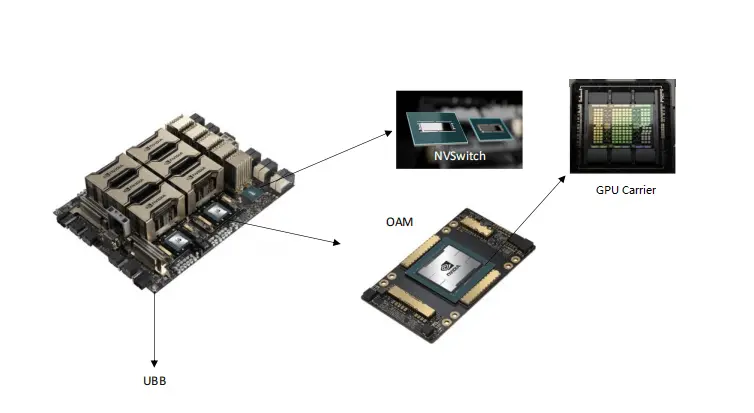 I. AI Accelerator Cards—A Massive Opportunity
1.1 The Market Is Taking Off
I. AI Accelerator Cards—A Massive Opportunity
1.1 The Market Is Taking Off
AI accelerator cards power AI servers. They handle heavy tasks like image recognition, language processing, and running large AI models. A typical server uses 4 to 8 of these cards.
The market is booming in 2025. NVIDIA, AMD, and Intel are rolling out new tech fast. Chinese players like Huawei, Cambricon, and Hygon are also pushing their own AI chips to rely less on foreign suppliers.
These cards aren't just for data centers anymore. They're in smart cameras, industrial devices, and cars—handling real-time tasks at the edge. And innovation keeps accelerating. New products like NVIDIA's Rubin CPX and Google's TPU-Ironwood show performance climbing fast, with each generation raising the bar.
1.2 Why AI Accelerator Cards Need High-End PCBA
AI accelerator cards are different from regular electronics. They push PCBs to the limit. Here's why:
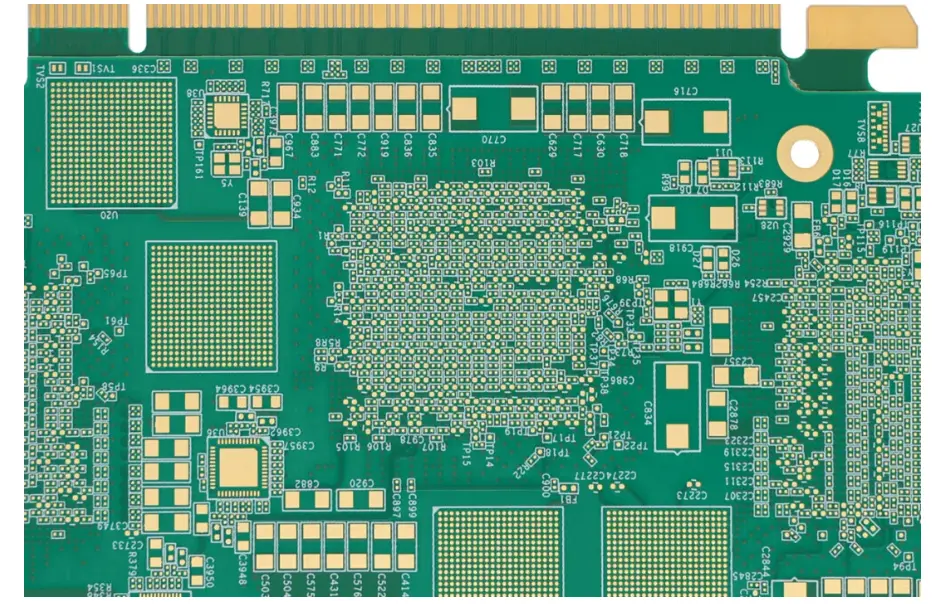
Tight spaces, tons of connections – They pack multiple GPUs and memory chips (like HBM) onto one board, with tens of thousands of tiny BGA pins that must connect perfectly.
Lightning-fast data – They use PCIe Gen5/6 and move data at over 32Gbps. At those speeds, even a tiny flaw can corrupt signals.
Extreme heat – One card can draw over 1000 watts—like a small space heater. All that power turns to heat, and if it's not managed, performance drops or parts fail.
Built to last – These cards run 24/7 for five years or more. No room for weak spots or early failure.
II. What Makes AI Accelerator Card PCBA So Special?
2.1 High Layer Count, Thick Boards, Large Size
AI accelerator cards are complex. They use
20 to 26 layers of circuitry—sometimes more. Think of it as a high-rise instead of a single-story house. Boards are 2.0mm or thicker, and keeping them flat during production is tough.
2.2 Special High-Speed Materials
Regular materials won't work. These cards need low-loss, high-speed materials (like M7 grade) to prevent signal loss. They have low Dk, low Df, and ultra-smooth copper. They also must handle heat well.
2.3 Multi-Step HDI and Any-Layer Interconnects
These cards use advanced HDI—often 5 to 7 steps, and increasingly Any-layer HDI. Blind vias act like hidden tunnels, connecting layers without drilling through the whole board. This saves space and improves signal quality. Any-layer interconnects let laser vias connect any two layers directly, making dense BGA routing easier. Microvias are tiny—just 0.1-0.125mm wide.
2.4 The Recessed Gold Finger Process
Here's something unique. Since the board is thicker than standard PCIe cards, gold fingers must be recessed—buried inside during lamination and exposed later. They survive 4-6 lamination cycles without contamination. Finished gold fingers must meet strict PCIe 5.0/6.0 specs for thickness, flatness, and wear.
III. The Hard Parts—Technical Barriers in Manufacturing
3.1 Stackup Design and Lamination Control
With 7-step HDI, you go through 7 lamination cycles—far more than standard boards. That creates real challenges. Different layers have different copper amounts, so they expand and shrink at different rates during lamination. Keeping everything aligned is difficult. After multiple pressings, buried vias and laser holes must line up within ±2mil. Miss by a little, and the board fails. Plus, M7 materials act differently than standard FR4. Wrong lamination settings can cause layers to separate.
3.2 Fine Lines and Registration
Line widths and spacing down to 3/3mil (75μm) are standard. Routing signals from dense BGAs means trace-to-via spacing as tight as 5mil or less. And laser drilling must hit its target exactly—any misalignment kills the connection.
3.3 Signal Integrity and Power Integrity
Two big challenges stand out. First, signal integrity: PCIe Gen4/5 signals need clean, short paths with precise impedance control. Any interference distorts the signal. Second, power integrity: These cards draw massive current—think thousands of amps. Delivering that power without voltage drops, bottlenecks, or electromigration is a huge challenge. And with extreme local heat, designers use dense thermal vias and inner copper planes to create board-level cooling paths.
IV. How We Help You Succeed
4.1 We're Your Partner, Not Just a Supplier
We don't just make boards—we help you design them right from the start. We join early to review stackups and check for problems before they get expensive. We suggest stackups that balance high-speed signals with heat management, and we run simulations to catch issues early and fix them before production.
4.2 Consistent Quality from First Sample to Mass Production
Every step is checked—from lamination to final shaping. We test boards with thermal cycling, vibration, and high heat/humidity to make sure they last in the real world. We run prototypes and mass production on the same line, with the same settings. If it works in samples, it works in volume.
4.3 A Real-World Example
We've delivered 26-layer, 7-step HDI AI accelerator card PCBA for multiple AI chip companies. All passed PCIe 5.0 testing. The recessed gold fingers came out clean—no resin, no residue, flatness under 0.1mm. Boards survived -40°C to 125°C thermal cycling with no separation. Mass-production yields were over 98%, with stable, on-time delivery.
V. Let's Tackle This Challenge Together
AI accelerator cards are among the most complex and valuable products in the PCBA industry. They're the ultimate test of a factory's skills—and a true benchmark that shows which manufacturers can really deliver.
We bring experienced teams, stable production, and full support to every project. Whether you need 7-step HDI for cloud cards or any-layer interconnects for edge modules, we'll help you get to market fast with products that perform.
Ready to talk? Contact us today for professional AI accelerator card PCBA solutions!
Shenzhen Kingsheng Technology Co., Ltd. has rich experience and a professional technical team in PCBA.
Contact KingshengPCBA today to request a quote or discuss your PCBA project.
 +86 13828766801
 kspcba@c-alley.com
 https://www.kingshengpcba.com/
 2/F, Building 6, Tangtou 3rd Industrial Zone, Tangtou Community, Shiyan Town, Baoan District, Shenzhen, China, 518108