Analysis of Manufacturing Difficulties and Countermeasures for Industrial Wi-Fi Module PCBA
In the context of the Industrial Internet of Things (IIoT), Wi-Fi modules are responsible for device data upload and remote control. Unlike consumer electronics, industrial environments impose extremely high demands on the stability, anti-interference capability, and weather resistance of the PCBA. As an engineer who has been deeply involved in PCBA assembly for a long time, I will analyze the three core manufacturing difficulties and our practical
countermeasures for industrial Wi-Fi module PCBA from a manufacturing perspective.
Difficulty 1: Consistency Control of Radio Frequency Signals
Industrial Wi-Fi modules operate at high frequencies (2.4GHz / 5GHz / 6GHz), and the RF PCB traces are no longer ordinary wires, but rather microwave transmission systems. During the manufacturing process, small deviations in impedance can lead to signal reflection and power attenuation, ultimately manifesting as reduced communication distance or unstable connections.
Challenges on the Manufacturing End:
During the SMT placement stage, we found that variations in the parasitic parameters of passive components, uneven solder paste thickness, and the integrity of grounding vias can all directly impact RF performance. Especially in the Wi-Fi 7 (802.11be) era, 4096-QAM modulation is extremely sensitive to signal quality, requiring impedance control to be tightened from the conventional ±10% to within ±5%.
Our Countermeasures:
1.Strict Control of Materials and Processes: For high-frequency boards (such as Rogers 4350B or Megtron 6 materials), we have established a dedicated RF Bill of Materials (BOM) library. For 01005 and 0201-sized inductors and capacitors on RF paths, we mandate the use of nano-silver paste printing technology to ensure solder paste volume consistency (CPK ≥ 1.33), minimizing impedance shifts caused by parasitic capacitance after placement.
2.Microvia Planarization Treatment: Industrial modules often use HDI boards for BGA fan-out. We employ a laser blind via plating planarization process to ensure the pads on the microvias are flat. This prevents BGA cold solder joints or bubbling during reflow soldering, thereby ensuring the impedance continuity of the RF path.
Difficulty 2: High-Density Assembly and Thermal Management
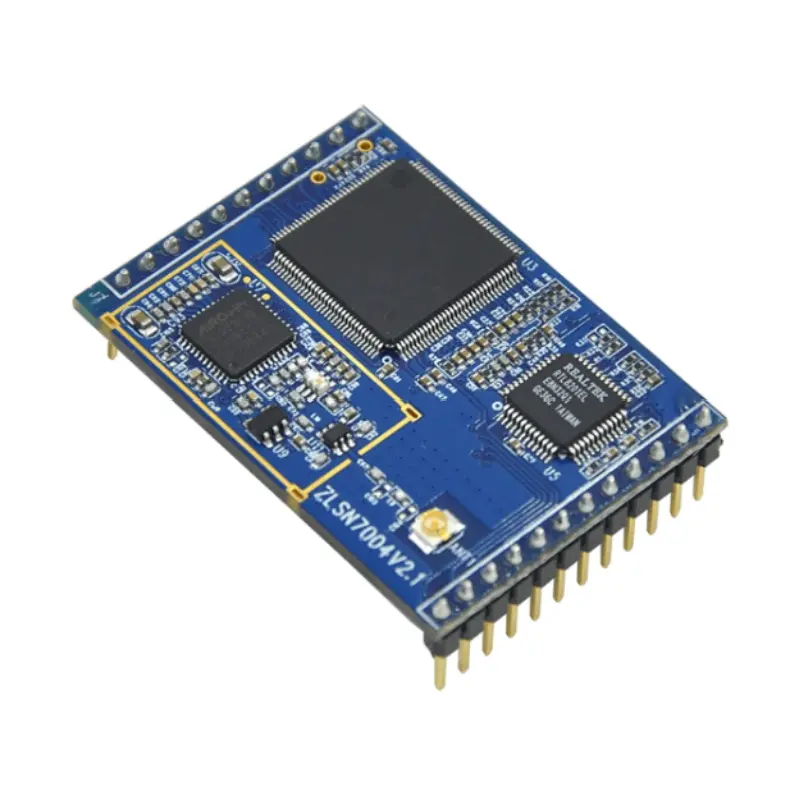
Industrial-grade Wi-Fi modules (such as those using QCN9074 or IPQ9574 solutions for industrial routers or gateways) are moving towards high integration and high power. These PCBA boards often integrate multi-core application processors, Wi-Fi/Bluetooth chips, and numerous passive components, resulting in a sharp increase in heat generation per unit area.
Challenges on the Manufacturing End:
1.Component Miniaturization and Placement Accuracy: The extensive use of 01005 (0.4mm × 0.2mm) passive components and CSP packages with 0.3mm pitch poses extreme demands on the release accuracy of solder paste printing and the alignment accuracy (≤ 25μm required) of the placement machine.
2.Soldering Stress from Thermal Management Structures: To dissipate heat, many industrial motherboards use thick copper foil (2oz or more) or embedded copper coins/blocks processes. Thick copper areas absorb heat quickly, while thin areas heat up faster. This significant temperature difference during reflow soldering can easily lead to BGA cold solder joints or component cracking due to thermal stress.
Our Countermeasures:
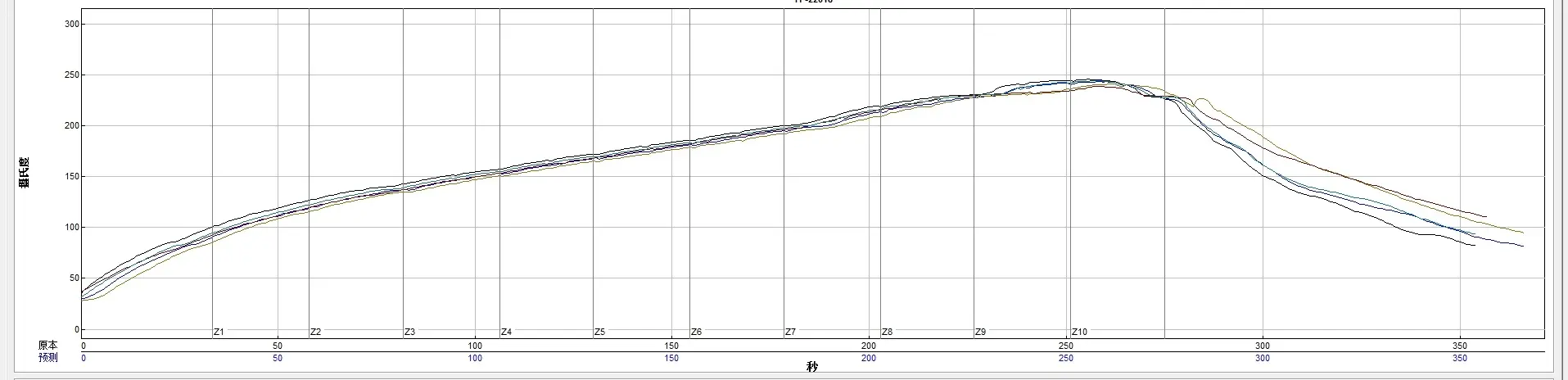
1.Customized Reflow Profile: We no longer use generic oven temperature settings. For each specific industrial Wi-Fi module PCBA, considering its thickness, copper distribution, and component layout, we use temperature profilers to measure actual temperatures across the board and customize a "slow ramp + soak" profile. Especially when soldering power amplifiers (PAs) with large ground pads, we ensure complete solder wetting by extending the time above liquidus, while controlling the peak temperature to prevent chip damage.
 2.100% X-Ray Inspection and Process Validation:
 For BGA and QFN packages, we employ 3D X-Ray inspection, not only to check for shorts and cold solder joints but also to analyze solder ball voiding rates. We strictly control voiding under RF chips to below 5% to prevent solder joint cracking due to hot spots during high-power transmission.
Difficulty 3: Electromagnetic Shielding and Conformal Coating Protection
Industrial environments are harsh, filled with various strong electromagnetic interference sources like motors and drives. Wi-Fi modules must not only prevent being interfered with but also prevent their own radiation from interfering with other sensitive devices on the industrial bus. Simultaneously, high humidity, dust, and salt spray environments pose significant threats to the long-term reliability of the PCBA.
Challenges on the Manufacturing End:
Traditional two-piece shields require a second pass through the reflow oven after placement. This not only increases the risk of thermal shock but also carries risks like shield movement and short circuits caused by residual flux trapped inside. Furthermore, efficiently applying conformal coating after assembly without affecting RF interfaces and heat dissipation areas is a major challenge.
Our Countermeasures:
1.Multi-Point Soldered Shield Solution: We promote the use of "multi-point soldered" or "snap-fit" shields. For designs that must use two-piece shields, we optimize the stencil aperture design to precisely control the solder volume on the shield's pads, ensuring good grounding for heat dissipation while preventing solder balls from entering the shielded area and causing shorts.
2.Selective Conformal Coating: After assembly and testing, we use robotic selective coating technology, applying conformal coating only to non-RF and non-heat-dissipation areas. We strictly ensure uniform coverage of solder joints and component lead roots with acrylic or polyurethane coating to resist salt spray corrosion and condensation short circuits in industrial environments.
Conclusion
The difficulty in manufacturing industrial Wi-Fi module PCBA lies not in "being able to solder it on," but in "soldering it stably for long-term reliable operation." From micron-level impedance control to precise balancing of thermal stress, and finally to protection in harsh environments, every step requires close collaboration between the manufacturing end and the design end (DFM). As a PCBA assembly house, we are not just placing components; we are building a stable and reliable wireless bridge for industrial equipment.
Shenzhen Kingsheng Technology Co., Ltd. has rich experience and a professional technical team in PCBA.
Contact KingshengPCBA today to request a quote or discuss your PCBA project.
 +86 13828766801
 kspcba@c-alley.com
 https://www.kingshengpcba.com/
 2/F, Building 6, Tangtou 3rd Industrial Zone, Tangtou Community, Shiyan Town, Baoan District, Shenzhen, China, 518108