Difficulties and Countermeasures in Manufacturing PCBA for AI Health Monitoring Wristwatches
As a blog writer deeply involved in the PCBA industry, I am often asked by clients, "Why does the R&D and manufacturing cost for such a small smartwatch motherboard remain so high?" The answer is simple: The PCBA for AI health monitoring wristwatches is one of the most demanding products in the current electronics manufacturing field, with the strictest requirements for "miniaturization" and "reliability." To integrate heart rate sensors, AI edge computing chips, Bluetooth RF units, and power management systems within a square inch, while ensuring stable operation in environments exposed to human sweat and frequent bending, is undoubtedly an ultimate challenge to manufacturing technology. This article will delve into three core difficulties in the manufacturing process of AI health monitoring wristwatch PCBA and share corresponding engineering countermeasures.
Difficulty 1: Ultra-High Density Assembly and High-Precision Pick-and-Place of Miniature Components
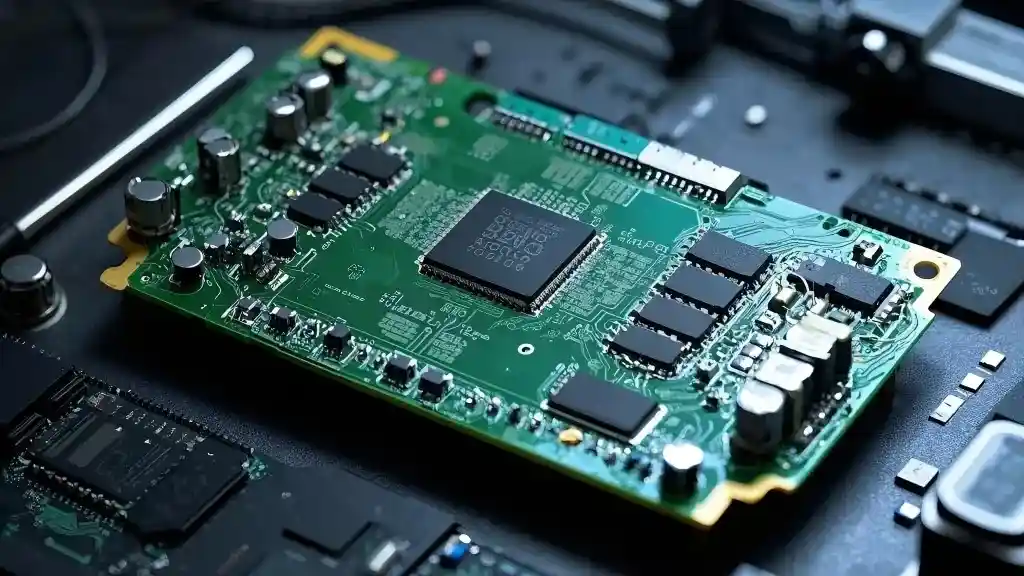
AI health monitoring wristwatches are becoming increasingly powerful, evolving from PPG heart rate monitoring to ECG analysis, and even incorporating local AI inference capabilities. This requires the PCBA to carry more ICs and passive components than typical wearable devices. To minimize size, engineers are forced to adopt 01005 (0.4mm × 0.2mm) or even smaller passive components, along with wafer-level chip-scale packages featuring 0.1mm pitch. During the SMT placement stage, these components, being as small as fine sand grains, impose extremely high demands on placement accuracy.
Main Manifestations:
Even slight vibration or positioning deviation from the placement machine can easily lead to defects such as tombstoning, misalignment, or missing parts. Furthermore, with extremely small pad spacing, the precision of solder paste printing must be incredibly accurate. Slightly too much paste can cause bridging (short circuits), while too little can result in poor soldering or the "head-in-pillow" defect.
Engineering Countermeasures:
1.High-Precision Equipment & Tooling: Utilizing high-speed placement machines with positioning accuracy up to ±0.01mm is mandatory, along with nano-scale stencils manufactured using electroforming processes to ensure consistent and full solder paste release.
2.Strict DFM Review: Engineering intervention during the design phase is crucial to optimize pad design and avoid placing large components near flex circuit edges or bend areas, mitigating placement risks at the source.
Difficulty 2: Thermal Deformation Challenge of Flexible Substrates and Rigid-Flex Boards
To conform to the wrist's curvature or reserve space for antennas, AI health monitoring wristwatches commonly employ Flexible Printed Circuits (FPC) or rigid-flex boards. While the polyimide (PI) substrate enables bendability, it creates significant challenges during the SMT reflow process. Under high temperatures, the thin, membrane-like flex circuit is prone to thermal deformation and shrinkage. This causes misalignment between previously accurate pads and components, and in severe cases, can even lead to delamination.
Engineering Countermeasures:
1.Reflow Carriers/Tooling: During the reflow process, specialized rigid carriers (tooling) must be used to completely flatten and secure the FPC. This simulates the support environment of a rigid board, effectively preventing high-temperature warpage.
2.Low-Temperature Reflow Process: Employing low-temperature solder paste (e.g., Sn42Bi58 alloy) is a key strategy, lowering the peak reflow temperature to the range of 180-200°C, compared to the traditional 230°C+. This effectively reduces thermal stress on the polyimide substrate and adhesive layers, minimizing delamination risks.
Difficulty 3: Long-Term Reliability in Harsh Environments
AI health monitoring wristwatches are quintessential "body-worn devices." They are constantly exposed to sweat, humidity, and the continuous micro-bending stresses generated by human movement. This environment presents a significant challenge to the solder joint strength and protective capabilities of the PCBA. If moisture ingress occurs, corroding the delicate PPG sensor circuits or power management IC pins, it can lead to intermittent device failure or complete scrapping.
 Engineering Countermeasures:
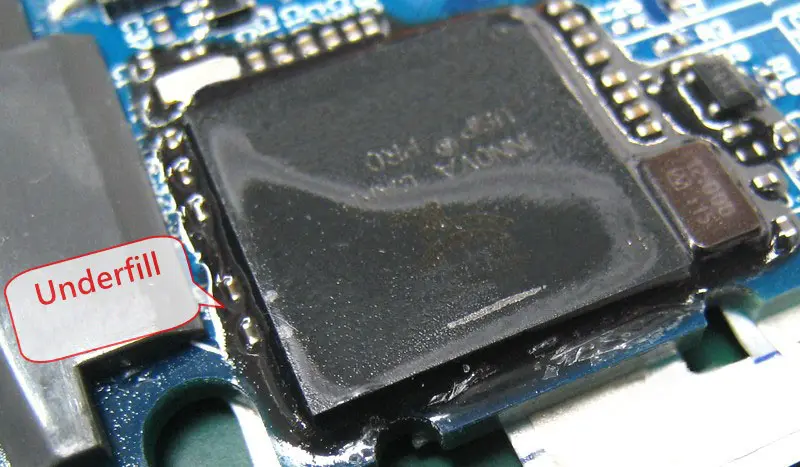
1.Underfill & Dispensing Reinforcement:
Engineering Countermeasures:
1.Underfill & Dispensing Reinforcement: For ICs subjected to frequent mechanical stress (such as the main processor), underfill application is essential. This distributes stress between the chip and the substrate, protecting the minute solder balls.
2.Nano-coating & Conformal Coating: After assembly, the PCBA must undergo thorough cleaning and protective coating application. Given that traditional conformal coatings on such high-density boards might affect RF signals or sensor performance, ultra-thin, uniform nano-coatings (like Parylene) have become the preferred choice for high-end watches, providing moisture and sweat resistance without compromising flexibility.
Conclusion
Manufacturing PCBA for AI health monitoring wristwatches is far more than simple component stacking. It demands that manufacturers not only possess the ability to handle 01005 components, but also have the systematic engineering capabilities to manage the stress of flexible materials, control complex thermal fields, and build long-term protection systems. Only by overcoming these three critical hurdles can we ensure that every delivered PCBA operates precisely and reliably on the user's wrist. As a PCBA factory, we serve not only as assemblers of circuits but also as the final guardians of product reliability.
Shenzhen Kingsheng Technology Co., Ltd. has rich experience and a professional technical team in PCBA.
Contact KingshengPCBA today to request a quote or discuss your PCBA project.
 +86 13828766801
 kspcba@c-alley.com
 https://www.kingshengpcba.com/
 2/F, Building 6, Tangtou 3rd Industrial Zone, Tangtou Community, Shiyan Town, Baoan District, Shenzhen, China, 518108