Three Major Manufacturing Challenges of UPS PCBA
Uninterruptible power supply (UPS) serves as last line of defense for data centers, medical equipment, and industrial control systems, and UPS PCBA is the absolute core of this defense line. From the perspective of our PCBA assembly plant, the greatest challenge in manufacturing these boards does not stem from extremely high component density, but rather from the physical contradiction between "heat" and "weight."
Based on production experience, this article analyzes three core difficulties and control strategies in UPS PCBA manufacturing.
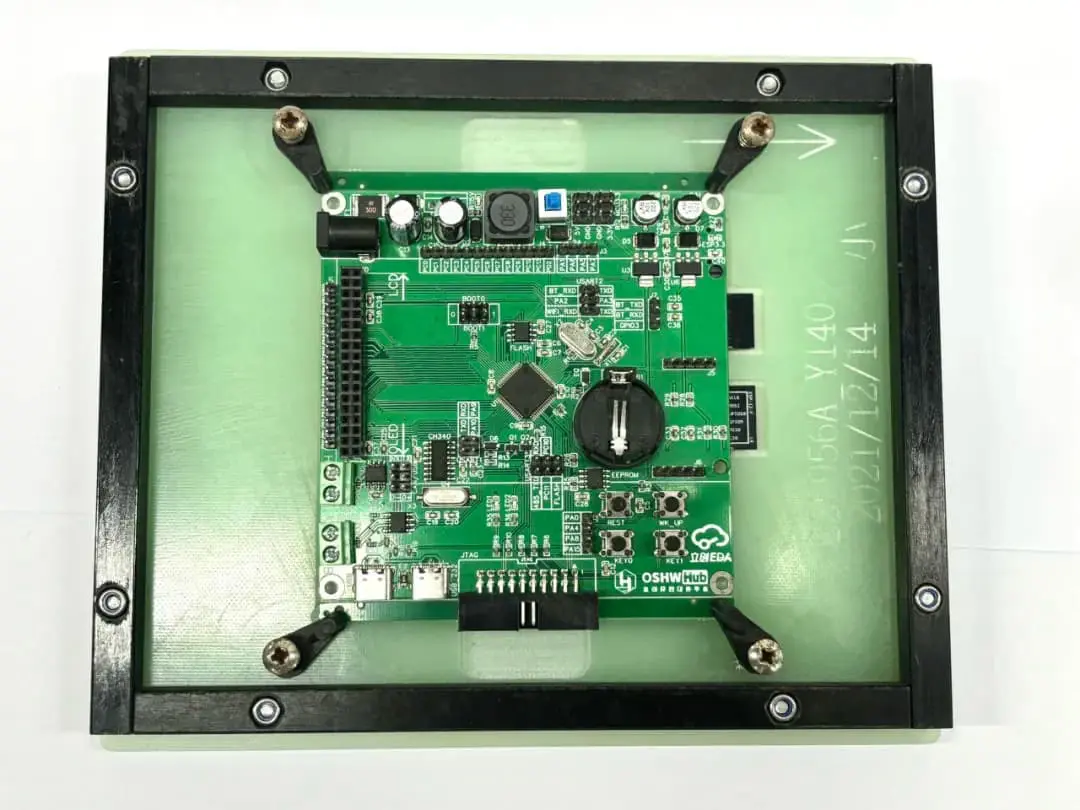 1. Heat Absorption Effect of Thick Copper Layers and Soldering Wetting Issues
To handle high currents, UPS boards typically use 2-4 oz or even thicker copper layers, which is fundamentally different from the 1 oz copper thickness found in standard consumer-grade PCBs. During reflow soldering, this thick copper acts as a heat sink, rapidly drawing heat away.
Pain Point: If the reflow oven's heat compensation capability is insufficient, the temperature difference across the board surface can easily exceed 20-30℃. This can lead to insufficient temperature at large pads or power device pins, resulting in cold solder joints or poor wetting, while smaller components may overheat.
Countermeasures:
*Equipment Selection: It is essential to use a reflow oven with at least 8 heating zones and strong heat compensation capabilities; simple or basic models are inadequate. *Profile Optimization: For thick copper boards, the preheat and reflow zone times should be appropriately extended (typically 20%-40% longer than for standard boards) to ensure that areas with high thermal mass reach the necessary soldering temperature.
2. Placement and Handling Stability of Heavy, Odd-Shaped Components
UPS PCBAs are densely populated with heavy components like transformers, large capacitors, and IGBT modules, while also featuring fine-pitch ICs or BGAs.
Pain Point: If high-speed placement machines prioritize CPH (cycles per hour) at the expense of stability, the inertia of heavy components during handling or placement can easily lead to placement shift. More critically, during secondary reflow or wave soldering, excessively heavy components may cause pad lifting or tombstoning due to gravity or vibration.
Countermeasures:
*Placement Pressure Control: Use placement heads capable of precisely controlling Z-axis pressure to avoid cracking ceramic-based components due to excessive pressure, or component floating due to insufficient pressure.
*Fixturing: Utilize central support pins or customized fixtures on the conveyor to prevent large UPS mainboards from undergoing warpage and deformation due to their own weight and material softening at high temperatures.
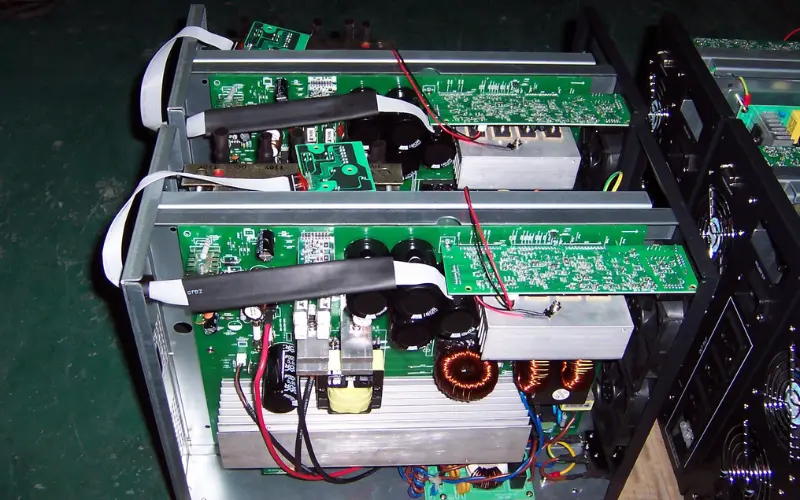
3. Thermal Balance and Reliability Verification in High-Density Power Areas
As UPS units evolve towards higher power density, heat-generating components like MOSFETs and inductors are arranged in increasingly close proximity.
Pain Point: This dense layout exacerbates thermal coupling effects. If components have poor coplanarity after soldering, or if the void ratio in solder joints is too high, localized heat accumulation during actual loaded operation will accelerate solder joint fatigue, ultimately leading to premature failure.
Countermeasures:
*Stencil Optimization: Implement step stencil designs for power pads to ensure sufficient solder paste volume for large pads (reducing void ratio) while preventing shorts on small pads.
*Inspection Focus: Don't rely solely on AOI (Automated Optical Inspection) for visual checks. It is crucial to strengthen FCT (Functional Circuit Testing) for load capacity and ripple analysis, and to use thermal imaging observation during testing to identify potential latent soldering defects.
Conclusion
Manufacturing UPS PCBA is essentially a game of balancing thermal energy and gravity. Only through the stability of heavy-component placement, precise temperature control for thick copper soldering, and rigorous power-aging tests can we ensure that these "standby guardians" perform flawlessly when called upon in critical moments.
Shenzhen Kingsheng Technology Co., Ltd. has rich experience and a professional technical team in PCBA.
Contact KingshengPCBA today to request a quote or discuss your PCBA project.
 +86 13828766801
 kspcba@c-alley.com
 https://www.kingshengpcba.com/
 2/F, Building 6, Tangtou 3rd Industrial Zone, Tangtou Community, Shiyan Town, Baoan District, Shenzhen, China, 518108