Balancing High Precision and Low Power Consumption: A Guide to Portable Blood Glucose Meter PCBA Design
In today's world where diabetes management increasingly relies on portable devices, blood glucose meter design faces a dual challenge: a stringent balance between medical-grade accuracy and consumer-grade power consumption. Achieving laboratory-level testing stability within limited size and power consumption has become a core issue in PCBA design.
 Interference-Resistant Design: Creating a Pure Measurement Environment
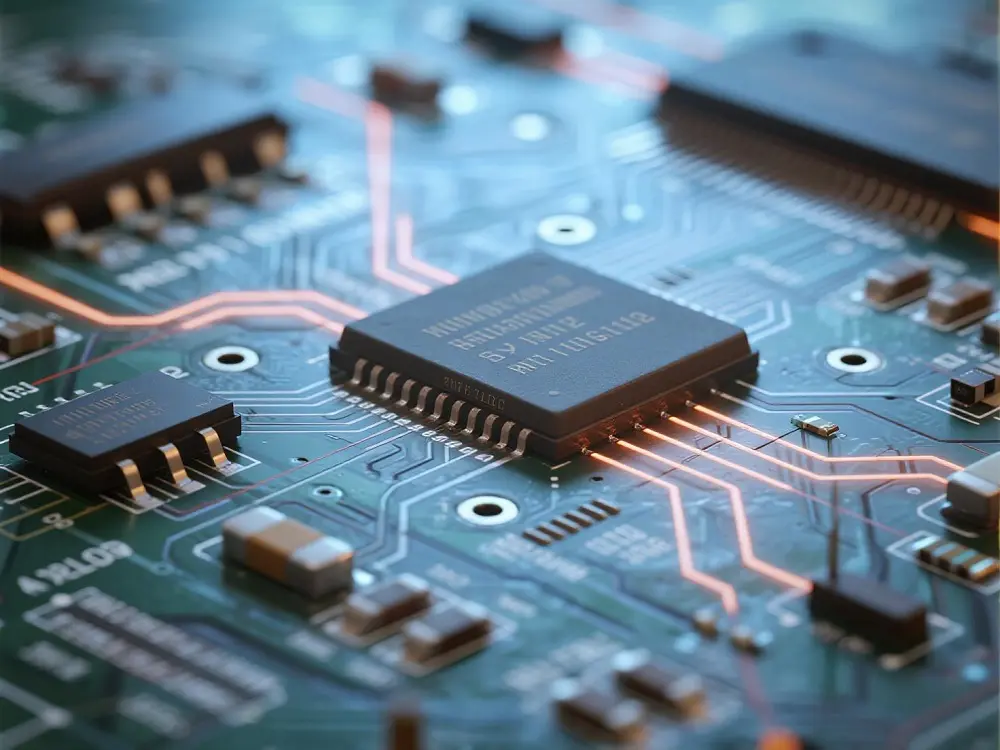
Blood glucose testing is based on the principle of micro-current measurement, making it highly susceptible to environmental interference. Firstly, "zoning isolation" should be implemented in the PCB layout, physically separating weak analog signal areas from digital circuits and power conversion modules, maintaining a spacing of at least 5mm. Critical analog traces are protected with a "sandwich" ground plane, with copper layers on both sides creating a Faraday cage effect. To address 50/60Hz mains interference, an adaptive notch filter is added, along with synchronous sampling technology, to acquire signals near the zero-crossing point of the mains cycle.
To address common radio frequency interference in portable devices, 4-layer board design is adopted, placing the complete ground plane below the top signal layer to provide a low-impedance return path. A common-mode choke and TVS diode are added to the biosensor interface to suppress electrostatic discharge and transient voltage spikes. The ADC reference voltage source is a low-temperature drift device (<2ppm/℃) and powered by an independent LDO to avoid digital noise coupling.
Signal Chain Optimization: Precise Conversion from Sensor to Digital
24-bit Σ-Δ ADC is selected; its oversampling characteristics push the noise spectrum to higher frequencies, which are then effectively removed by a digital filter. An auto-zeroing op-amp is used in the sensor excitation circuit to periodically correct the offset voltage. A biphase potentiostat circuit is designed to alternately apply positive and negative potentials during the measurement cycle, eliminating electrode polarization effects through differential calculation.
A temperature compensation algorithm is introduced, with high-precision thermistors placed near the sensor to correct enzyme activity changes with temperature in real time. A multi-point calibration mechanism is adopted, storing more than three sets of temperature-sensitivity coefficients during factory calibration, and the device compensates in real time using a lookup table method. During signal sampling, a median-of-10 consecutive measurements algorithm is used to effectively eliminate abnormal pulse interference.
Low-Power Architecture: Intelligent Power Management Strategy
Tiered Power Supply System: The sensor excitation section uses a switchable LDO, powered on only 10ms before measurement; the wireless module is completely powered off via MOSFETs; the core MCU switches to low-power mode in standby, retaining RTC and SRAM data.
Intelligent Wake-up Circuit Design: The device is in deep sleep mode most of the time (power consumption <1μA). A dedicated low-power comparator monitors user operation signals, waking the main MCU only when test strip insertion or button press is detected. A time-slicing working mode is adopted, decomposing the complete measurement process into multiple short-pulse tasks, returning to sleep mode immediately after each task is completed.
Optimized Software Algorithm: An event-driven architecture replaces the polling mode, with all peripherals operating in interrupt mode. The ADC sampling frequency is dynamically adjusted according to signal characteristics, reducing to 1/4 sampling rate during the stable phase. Data display uses partial refresh technology, updating only the changing value area, reducing LCD drive power consumption.
Ultimately, through the aforementioned system-level design, the device can achieve a standby time of over 2 years and more than 1000 continuous measurements powered by a single AAA battery, while maintaining a measurement accuracy error of less than ±3%, fully meeting the requirements of the ISO 15197:2013 standard. This balance between accuracy and power consumption is precisely the essence of portable medical device PCBA design.
Shenzhen Kingsheng Technology Co., Ltd. has rich experience and a professional technical team in PCBA.
Contact KingshengPCBA today to request a quote or discuss your PCBA project.
 +86 13828766801
 kspcba@c-alley.com
 https://www.kingshengpcba.com/
 2/F, Building 6, Tangtou 3rd Industrial Zone, Tangtou Community, Shiyan Town, Baoan District, Shenzhen, China, 518108