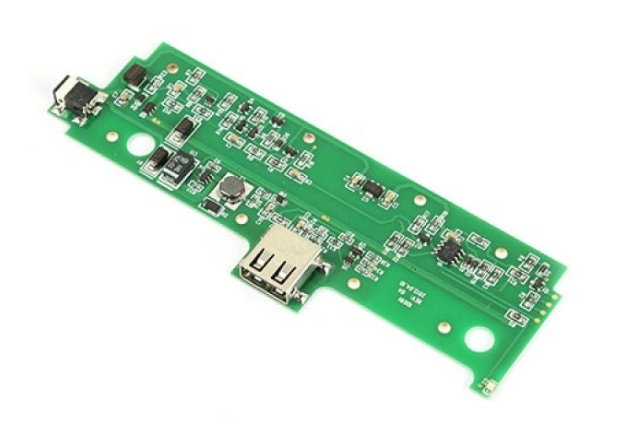
The Advanced PCBA at the Heart of Modern Voice Recorders
In the competitive landscape of professional and consumer electronics, the voice recorder remains an indispensable tool. Its core performance—clarity, reliability, and battery life—is fundamentally defined by its Printed Circuit Board Assembly (PCBA). This article explores the sophisticated PCBA solutions powering next-generation voice recorders, focusing on engineering capabilities, market-driven design, and the integrated technologies that deliver superior user experiences.
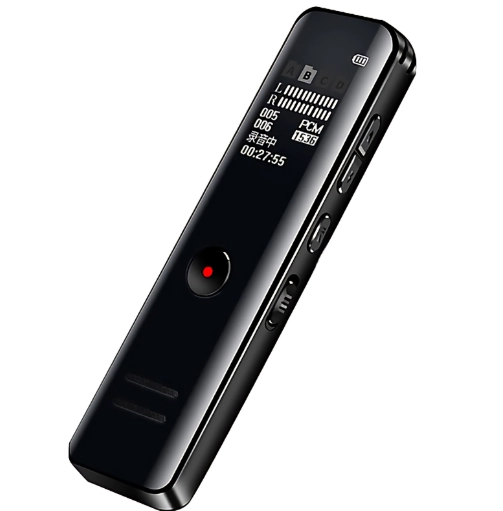 PCBA Engineering & Manufacturing Prowess
Modern voice recorder PCBA design demands a holistic approach that balances miniaturization, power integrity, and signal purity. Advanced manufacturing facilities utilize High-Density Interconnect (HDI) PCB technology and automated Surface-Mount Technology (SMT) lines to assemble microscopic components with precision. This allows for complex, multi-layered boards that fit into increasingly compact form factors without compromising functionality.
A cornerstone of engineering capability is Design for Excellence (DFX), encompassing Manufacturing (DFM), Test (DFT), and Cost (DFC). This ensures the design is not only electrically sound but also optimized for high-yield mass production, rigorous functional testing, and cost-effectiveness. Thermal management is critical; through simulation and strategic component placement, engineers dissipate heat efficiently, ensuring device stability during prolonged recording sessions.
Market-Driven Product Innovation
The market demands versatility. A high-performance recorder PCBA is no longer a simple audio capture device; it's a connected computing platform. The core architecture typically integrates:
1.A low-power application processor or microcontroller managing system functions.
2.High-quality audio codecs with built-in pre-amplifiers for pristine analog-to-digital conversion.
3.Multi-microphone input channels to support advanced beamforming and noise-cancellation algorithms essential for isolating speech in noisy environments like conferences or field interviews.
4.Integrated memory controllers and connectivity options (such as Bluetooth Low Energy or Wi-Fi) for seamless data transfer and cloud integration.
The most significant market differentiator is ultra-low power design. By employing efficient power management ICs (PMICs), deep-sleep states, and power-gating techniques, leading PCBAs enable recorders to achieve weeks of standby time and 30+ hours of continuous recording, meeting the needs of journalists, students, and professionals.
The Integrated Solution: Low-Power + Intelligent Noise Reduction
The true innovation lies in merging extended battery life with intelligent audio processing. This is achieved not just through hardware but via a co-designed firmware layer. A dedicated Digital Signal Processor (DSP) or a software-enabled CPU runs real-time algorithms that suppress constant background noise (e.g., HVAC hum, crowd murmur) while preserving vocal fidelity. This intelligent processing, combined with hardware-level shielding and optimized layout to minimize electromagnetic interference (EMI), delivers broadcast-quality audio capture in a portable device.
Conclusion
The evolution of the voice recorder is a story of PCBA innovation. From advanced manufacturing and rigorous DFX principles to market-focused integration of low-power computing and intelligent audio processing, the modern recorder PCBA is a marvel of condensed engineering. For OEMs and brands, partnering with a PCBA provider that masters these disciplines is crucial to developing products that stand out in a crowded market—products defined by their clarity, endurance, and unwavering reliability. The future points toward further integration of AI-based audio enhancement and wireless connectivity, promising even smarter, more autonomous recording tools.
Shenzhen Kingsheng Technology Co., Ltd. has rich experience and a professional technical team in PCBA.
Contact KingshengPCBA today to request a quote or discuss your PCBA project.
 +86 13828766801
 kspcba@c-alley.com
 https://www.kingshengpcba.com/
 2/F, Building 6, Tangtou 3rd Industrial Zone, Tangtou Community, Shiyan Town, Baoan District, Shenzhen, China, 518108