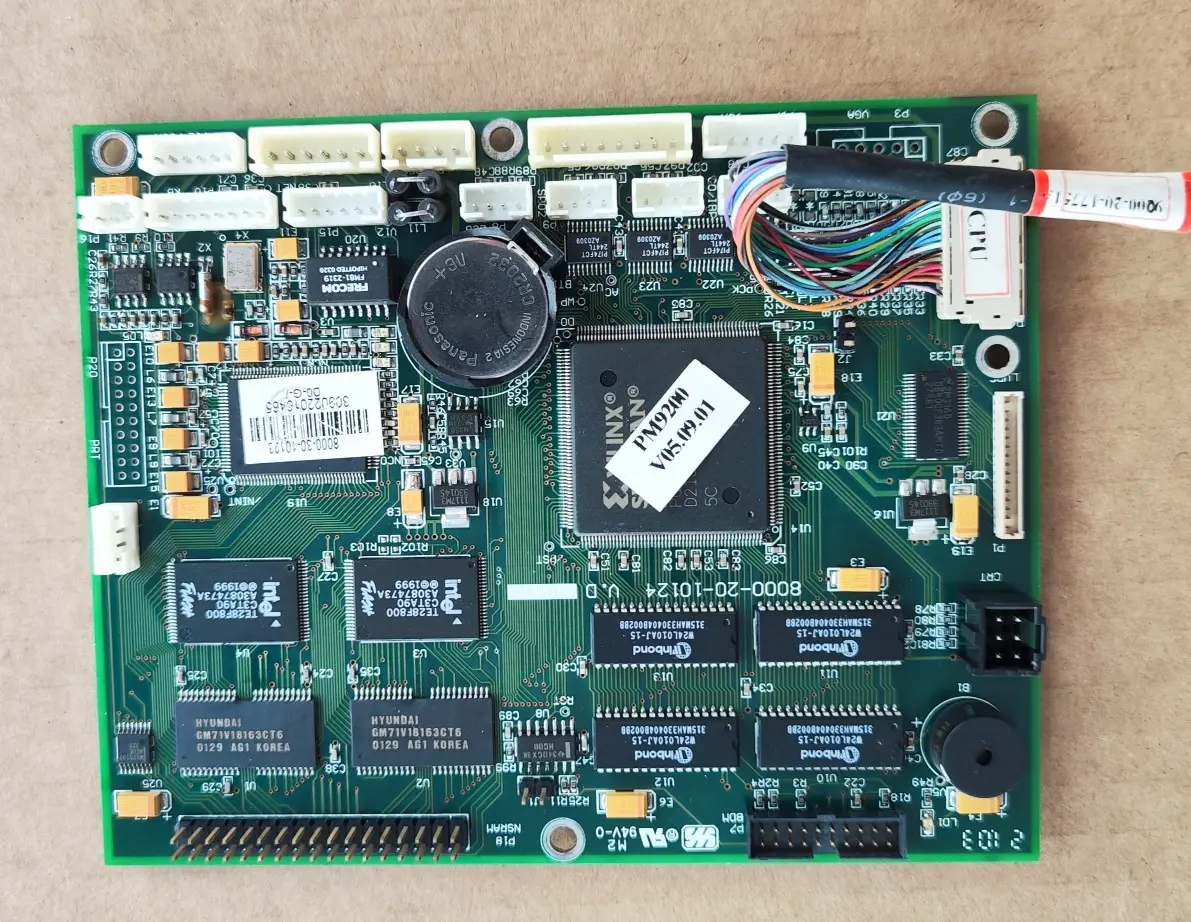
How to Ensure "Zero Interference" in Medical Monitor PCBAs?
In medical monitoring devices, every data point is critical to patient safety. Electromagnetic interference (EMI) is often a hidden "invisible killer" lurking behind these sophisticated electronic devices. It can cause distorted ECG waveforms, fluctuating blood oxygen readings, and even trigger device false alarms or crashes—all of which are unacceptable in a clinical setting.
Therefore, during the PCBA (Printed Circuit Board Assembly) prototyping phase of medical monitors, electromagnetic compatibility (EMC) design is not only a technical requirement but also an engineering safeguard for protecting life. Today, we will delve into the three core EMC design strategies that ensure the stable operation of medical monitor PCBAs.

I. Shielding Design
Electromagnetic shielding serves as the primary barrier against interference, particularly for acquisition modules handling microvolt-level physiological signals such as ECG and blood oxygen.
Application of Shielding Enclosures:
Covering the sensitive circuit areas with aluminum alloy or stainless steel housings can significantly reduce the influence of external electromagnetic fields by ensuring proper grounding (with the grounding resistance typically required to be ≤ 0.1Ω). For instance, the signal purity of an ECG signal acquisition module can be improved by over 60% after installing a custom shielding enclosure.
PCB Internal Layer Shielding:
Embedding copper foil shielding layers (recommended thickness ≥35μm) within multilayer PCBs enables physical isolation between digital and analog circuits. This "inter-layer shielding" effectively suppresses high-frequency noise coupling, providing a quiet transmission environment for weak physiological signals.
Design Tip: For shielding cover grounding, it is recommended to use multiple vias (≥4) evenly connected to the ground plane to avoid uneven grounding impedance that may lead to a decrease in shielding effectiveness.
II. Filtering Design
Whether it is conducted interference from the power grid or environmental noise in the signal link, filtering circuits are indispensable "signal guardians."
Power Supply Filtering:
Deploying a π-type filter network (typical configuration: 10μH power inductor + 100μF electrolytic capacitor) at the power input can suppress power supply ripple to below 50mV, providing a clean energy source for the entire PCBA.
Signal Filtering:
Customized filter designs are implemented based on the characteristics of different physiological signals.
For instance, a 0.5 Hz – 100 Hz band-pass RC filter is commonly used for ECG signals to remove baseline drift and high-frequency noise while preserving valid physiological information.
Application Suggestion: Filtering circuits should be placed as close as possible to the signal input or power interface to prevent signal re-contamination before filtering.
III. Grounding System
Proper grounding is not only a safety requirement but also the foundation of signal integrity. The grounding design of medical PCBAs needs to consider both low-frequency precision and high-frequency purity.
Low-Impedance Ground Plane:
Employing a ground plane with a copper thickness of ≥2 oz provides a low-impedance return path. Sensitive components and shielding enclosures should be connected to it via short, thick wires or an array of vias.
Hybrid Grounding Strategy:
Single-Point Grounding: Employed for low-frequency analog circuits (e.g., bioelectric amplifiers) to prevent power frequency interference introduced by ground loops.
Multi-Point Grounding: Suitable for high-frequency digital sections (e.g., processors, memory) to reduce the impact of grounding inductance on high-speed signals.
Practical Advice: In mixed-signal PCBs, a "separate but not isolated" grounding layout can be adopted, where analog ground and digital ground are connected at a single point, isolating noise while maintaining consistent potential.
Conclusion
Ensuring EMC in medical monitors is not a "single breakthrough" in a specific area but rather a comprehensive collaboration across the entire chain, from PCB layout and filter design to shielding structures and grounding systems.
Only by prioritizing electromagnetic compatibility (EMC) as a core design metric from the outset and conducting thorough verification during the prototyping phase can we ensure the final product delivers on its promise: stable monitoring of vital signs with zero interference.
Welcome to contact KingshengPCBA today to request a quote or discuss your PCB Assembly project.
Please send Email to kspcba@c-alley.com or call us through +86 13828766801 Or submit your inquiry by online form. Please fill out below form and attach your manufacturing files( PCB Gerber files and BOM List) if need quotation. We will contact you shortly.
 +86 13828766801
 kspcba@c-alley.com
 https://www.kingshengpcba.com/
 2/F, Building 6, Tangtou 3rd Industrial Zone, Tangtou Community, Shiyan Town, Baoan District, Shenzhen, China, 518108
We would also like to thank our customers for their trust and support. The company's outstanding achievements are mainly due to the loyalty of our customers, which also encourages and spurs our company to forge ahead.