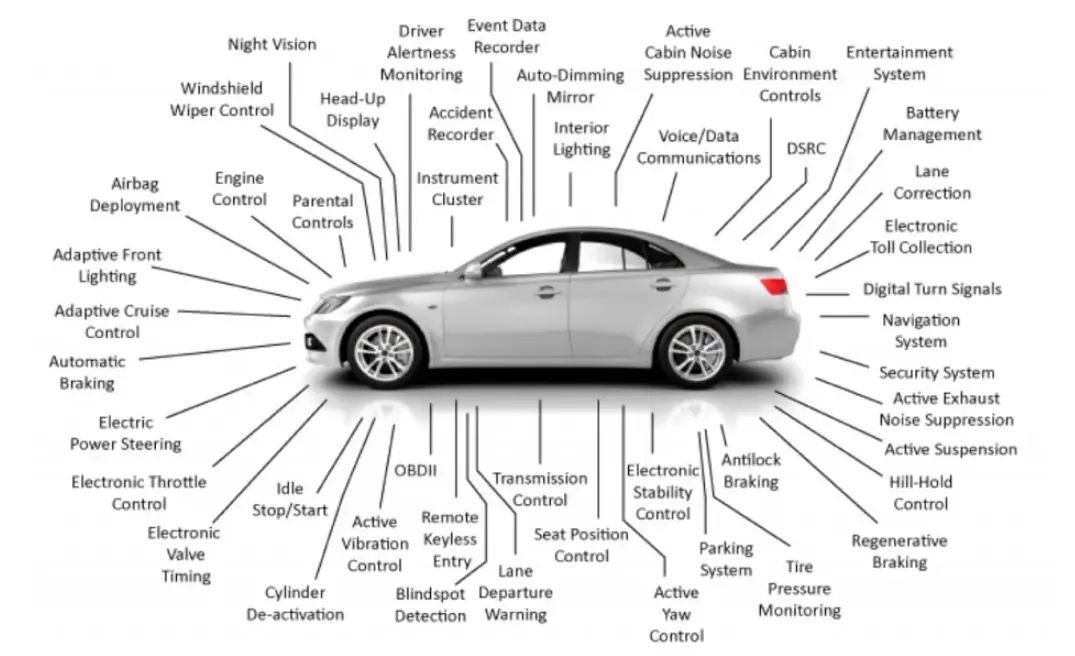
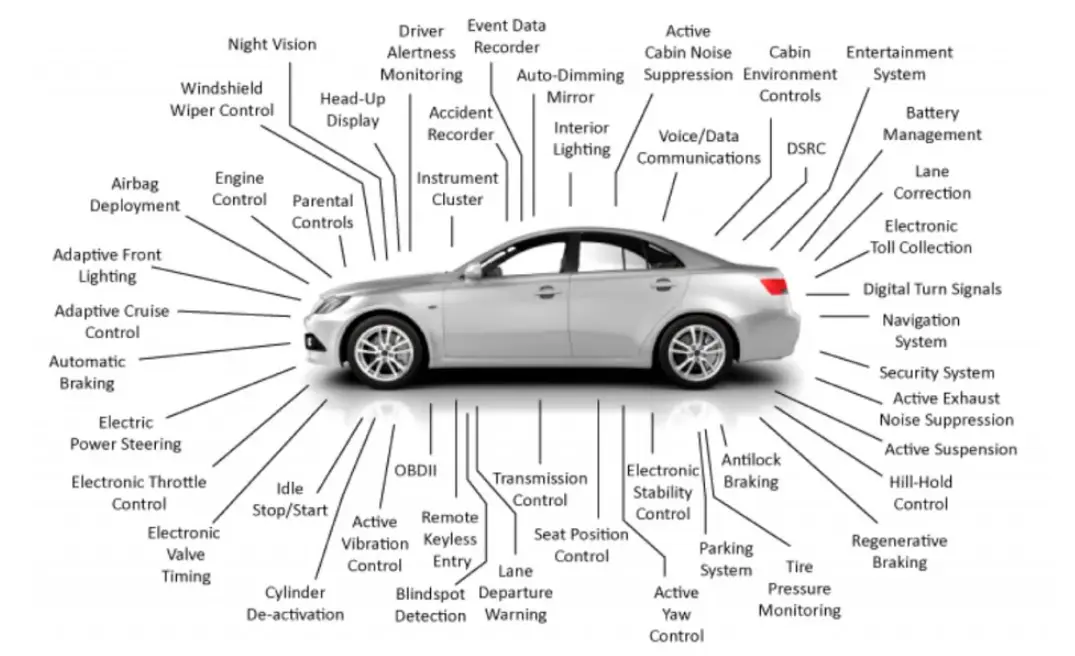
An automotive PCB (Printed Circuit Board) refers to the circuit boards used in vehicle electronic systems. As automotive electronics become increasingly complex, numerous Electronic Control Units (ECUs) are employed to manage systems such as engines, transmissions, brakes, and air conditioning. These ECUs rely on PCBs to mount electronic components and facilitate circuit connections. Automotive PCBs are characterized by the following key features:
High Reliability:
Automotive operating environments are harsh, requiring PCBs to withstand vibrations, shocks, extreme temperatures, and other demanding conditions. Thus, both the electronic components and PCB materials used in automotive applications must meet stringent reliability standards.
High Density & High Performance:
The complexity of automotive electronic systems demands PCBs to accommodate more components and interconnections within limited space while supporting high-speed signal transmission.
Environmental Adaptability:
Automotive PCBs must operate reliably under varying temperatures, humidity levels, and vibration conditions, necessitating the use of materials and manufacturing processes with robust environmental resilience.
EMI & EMC Performance:
Automotive electronic systems must mitigate electromagnetic interference (EMI) and ensure electromagnetic compatibility (EMC). Thus, PCB designs must incorporate these considerations to guarantee system stability.
High-Temperature Resistance & Durability:
Components in automotive engine compartments and chassis endure extreme heat and vibration. PCBs must exhibit high-temperature resilience and long-term durability to ensure stable operation.
Automotive PCB Standards
Automotive PCBs must comply with stringent standards and specifications to ensure their reliability, stability, and safety in automotive electronic systems. Some common automotive PCB standards include:
IPC-A-600G: This industry standard for printed circuit boards covers requirements for appearance, dimensions, layout, and surface characteristics, applicable to various types of PCBs, including automotive PCBs.
IPC-6012: This standard specifies detailed quality requirements for rigid PCBs and rigid-flex PCBs, covering aspects such as materials, manufacturing processes, and performance, and is applicable to automotive electronic PCBs.
ISO 26262: This is an international standard focused on automotive functional safety, covering the entire safety lifecycle from safety concept to decommissioning. It imposes stringent safety requirements on the design, manufacturing, and application of automotive PCBs.
AEC-Q100/AEC-Q200: Automotive Electronics Component Quality Evaluation Standards, applicable to integrated circuits and passive components. These standards cover temperature ranges, reliability testing, environmental robustness, and other aspects.
JESD22-A100: Environmental Stress Test Standard for Electronic Components and Modules, covering methods such as humidity, temperature, and vibration testing, used to evaluate the performance of automotive PCBs under various conditions.
IEC 61508: An international standard for functional safety, widely applied in automotive electronic systems. It requires that safety considerations be taken into account throughout the entire development and production stages of PCBs.
UL 94: This standard evaluates the flammability of plastic materials to ensure that the materials used in automotive PCBs meet fire safety requirements.
If you want to know more about Automatic PCB. Contact us today to discuss your project’s BOM and specifications!
Welcome to contact KingshengPCBA today to request a quote or discuss your PCB Assembly project.
 +86 13828766801
 kspcba@c-alley.com
 https://www.kingshengpcba.com/
 2/F, Building 6, Tangtou 3rd Industrial Zone, Tangtou Community, Shiyan Town, Baoan District, Shenzhen, China, 518108